Evaluating FeNO testing in primary care to support diagnosis and appropriate prescribing in a PCN in South Yorkshire. (ID 730)
Health Innovation Yorkshire & Humber
Abstract
Background
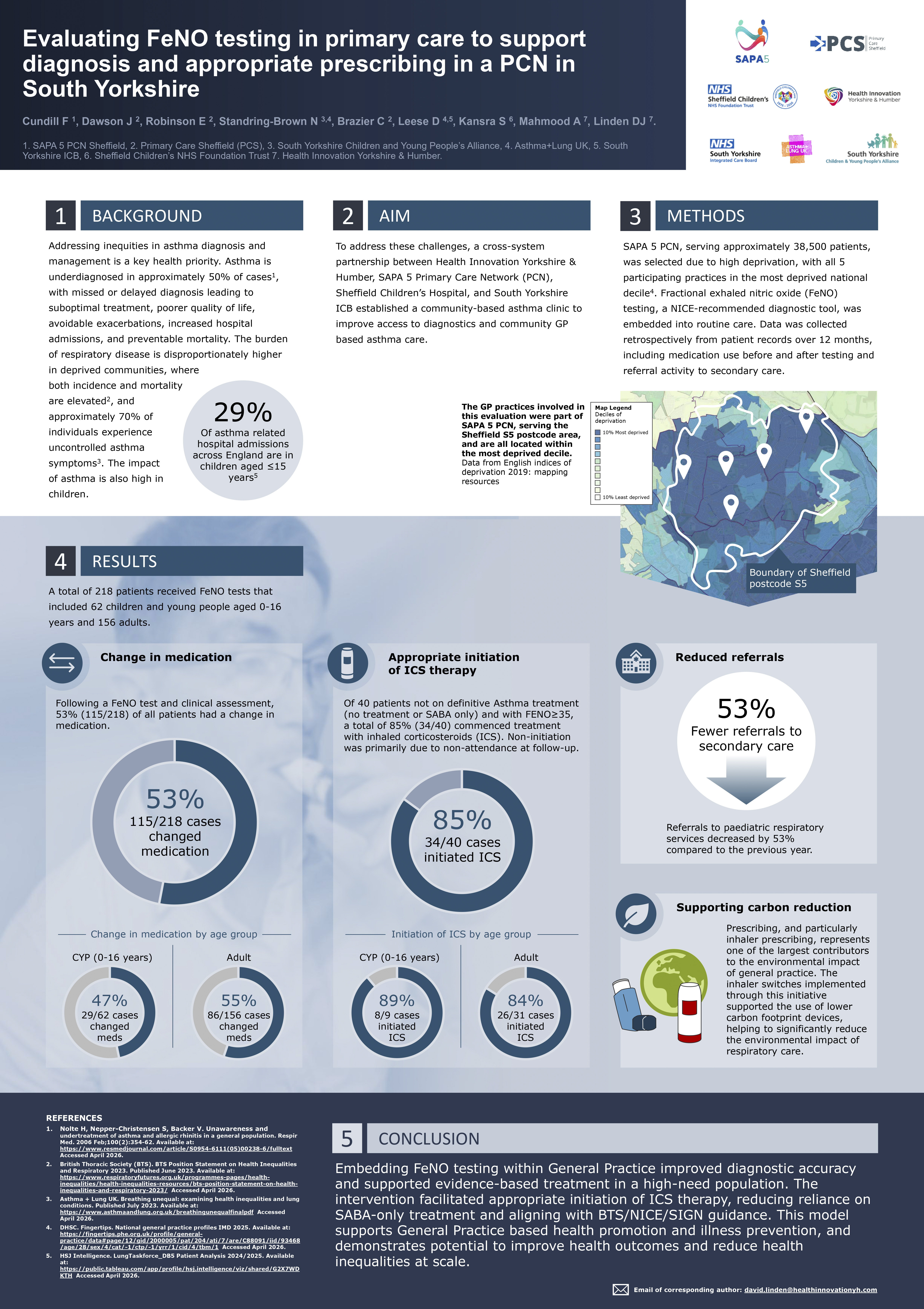
Addressing inequities in asthma diagnosis and management is a key health priority. Asthma is underdiagnosed in approximately 50% of cases[1], with missed or delayed diagnosis leading to suboptimal treatment, poorer quality of life, avoidable exacerbations, increased hospital admissions, and preventable mortality. The burden of respiratory disease is disproportionately higher in deprived communities, where both incidence and mortality are elevated[2], and approximately 70% of individuals experience uncontrolled asthma symptoms[3]. To address these challenges, a cross-system partnership between Health Innovation Yorkshire & Humber, SAPA 5 Primary Care Network (PCN), Sheffield Children’s Hospital, and South Yorkshire ICB established a community-based asthma clinic to improve access to diagnostics and community GP based asthma care.
Methods
SAPA 5 PCN, serving approximately 38,500 patients, was selected due to high deprivation, with all 5 participating practices in the most deprived national decile[4]. Fractional exhaled nitric oxide (FeNO) testing, a NICE-recommended diagnostic tool, was embedded into routine care. Data was collected retrospectively from patient records over 12 months, including medication use before and after testing and referral activity to secondary care.
Results
A total of 218 patients were included (62 children and young people aged 0-16 years; 156 adults). Following assessment, 53% (115/218) had a change in medication. Of 40 patients not on definitive Asthma treatment (no treatment or SABA only) and with FENO≥35, a total of 85% (34/40) commenced treatment with inhaled corticosteroids (ICS). Non-initiation was primarily due to non-attendance at follow-up. Referrals to paediatric respiratory services decreased by 35% compared to the previous year.
Conclusions
Embedding FeNO testing within General Practice improved diagnostic accuracy and supported evidence-based treatment in a high-need population. The intervention facilitated appropriate initiation of ICS therapy, reducing reliance on SABA-only treatment and aligning with BTS/NICE/SIGN guidance. This model supports General Practice based health promotion and illness prevention, and demonstrates potential to improve health outcomes and reduce health inequalities at scale.
1. Nolte et al. Respir Med 2006; 100: 354–362.
2. BTS Position Statement on Health Inequalities and Respiratory 2023.
3. Asthma+Lung UK. Breathing unequal 2023.
4. DHSC. Fingertips. National general practice profiles IMD 2025.
Funding: The costs were the purchase of the FeNO machine (£1850 plus VAT) and the mouthpieces (£185 plus VAT for a box of 50). This was funded by PCN monies.
Conflicts of interest: None.