Improving Foundation Doctor Knowledge of Updated Asthma and COPD Guidelines Through a Targeted Teaching Intervention: A Quality Improvement Project (ID 755)
Stepping Hill Hospital, Stockport
Abstract
Background
In recent years, management guidelines for asthma and chronic obstructive pulmonary disease (COPD) have evolved significantly, reflecting strong evidence for strategies such as anti-inflammatory reliever and maintenance-and-reliever therapies in asthma, and a more limited scope for inhaled corticosteroids in COPD. This has left even early years doctors with out-of-date knowledge, potentially affecting treatment decisions during primary care rotations.
Methods
A Foundation doctor-led teaching intervention was designed with a focus on the key aspects of diagnosis and management outlined in the 2024 NICE/SIGN/BTS asthma guidelines and 2025 GOLD report for COPD. A case-based presentation on modern asthma diagnosis and management, a didactic presentation on COPD and a summary interactive quiz were delivered across a period of three months. To assess knowledge at each point, an eight-mark multiple choice quiz was designed to assess key concepts across the diagnosis and management of both conditions.
Results
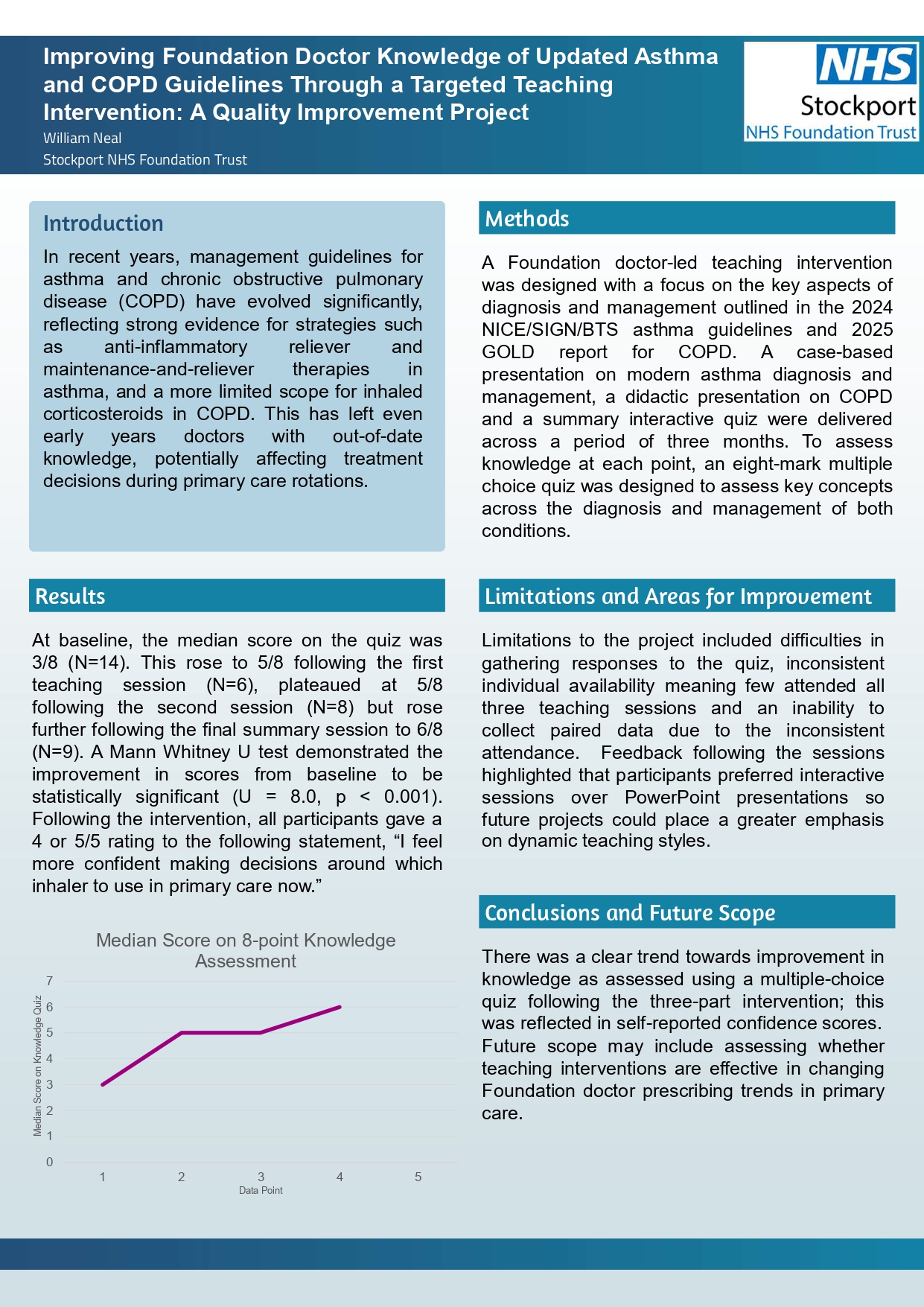
At baseline, the median score on the quiz was 3/8 (N=14). This rose to 5/8 following the first teaching session (N=6), plateaued at 5/8 following the second session (N=8) but rose further following the final summary session to 6/8 (N=9). A Mann Whitney U test demonstrated the improvement in scores from baseline to be statistically significant (U = 8.0, p < 0.001). Following the intervention, all participants gave a 4 or 5/5 rating to the following statement, “I feel more confident making decisions around which inhaler to use in primary care now.”
Conclusions
There was a clear trend towards improvement in knowledge as assessed using a multiple-choice quiz following the three-part intervention; this was reflected in self-reported confidence scores. Limitations to the project included difficulties in gathering responses to the quiz, inconsistent individual availability meaning few attended all three teaching sessions and an inability to collect paired data due to the inconsistent attendance. Future scope may include assessing whether teaching interventions are effective in changing Foundation doctor prescribing trends in primary care.
Funding: None
Conflicts of interest: None