Could a specialised role enhance service delivery across primary and secondary care? (ID 758)
NIHR Biomedical Research Centre - Respiratory, Glenfield Hospital
Abstract
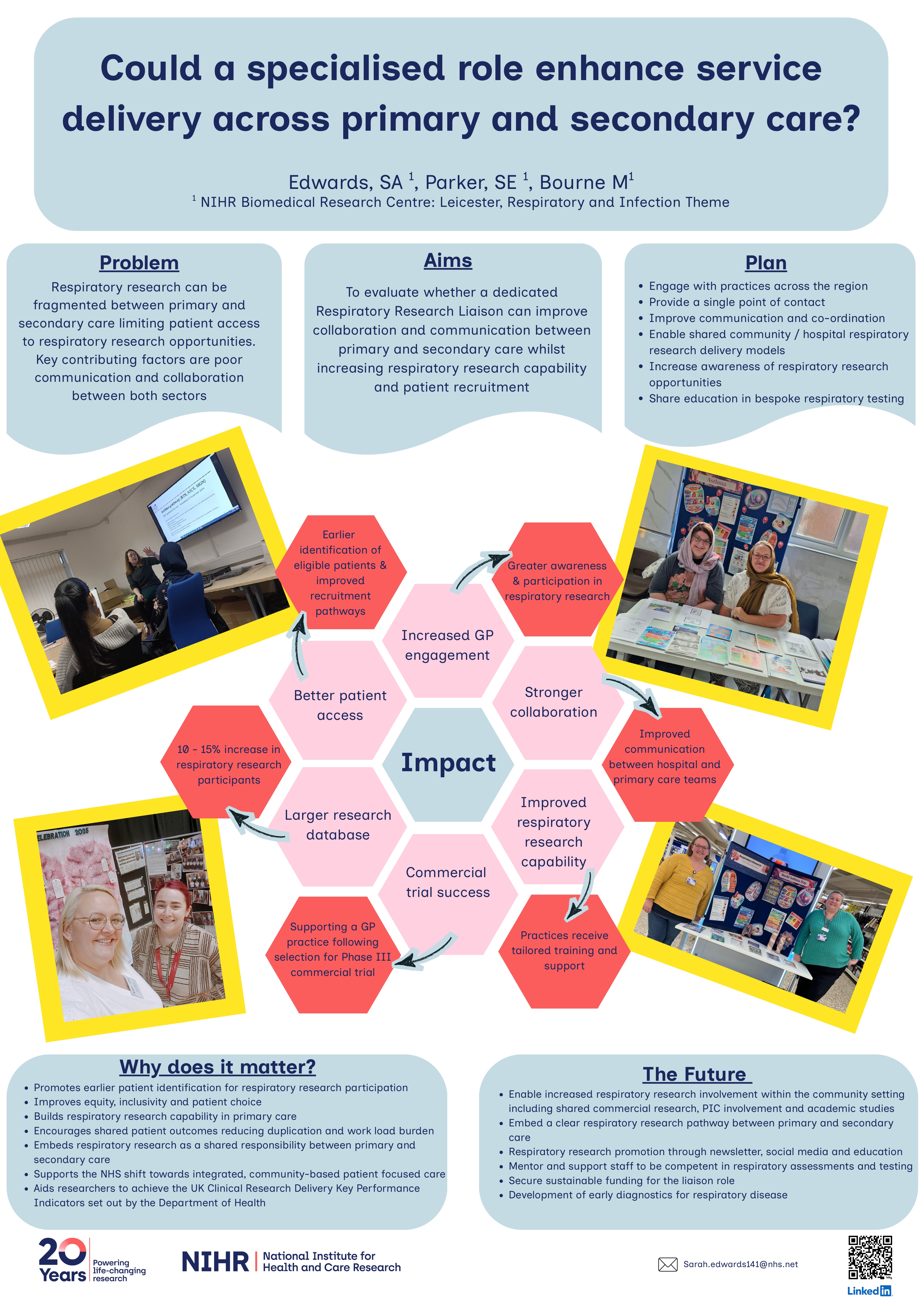
This pilot project explored the development and implementation of a novel cross sector research liaison designed to strengthen collaboration between primary and secondary care across the East Midlands demonstrating the strategic intent to address longstanding fragmentation between sectors. The initiative was established in response to national priorities outlined in the NHS 10-year Plan, which emphasises shifting care closer to home, reducing health inequalities, and embedding research as a core component of high quality, preventative healthcare1,2.
It focused on improving communication pathways, supporting joint feasibility assessments, and enhancing research capability within GP practices. Engagement activities included structured practice visits, bespoke respiratory training and supporting a practice in the successful selection for a phase 3 commercial trial, alongside collaboration with the Regional Research Delivery Network. Surveys identified key barriers to research participation, which echoed wider national findings that research in primary care is often perceived as an unaffordable luxury3. Targeted training, improved coordination, and the establishment of a single point of contact helped address these challenges.
The project achieved measurable progress including increased GP engagement with strengthened cross sector relationships, improved primary care research involvement processes, and a 10–15% expansion of the respiratory research database, leading to increased participation in commercial studies. These outcomes demonstrate the value of a dedicated liaison role in widening patient access, supporting earlier identification of eligible participants, and embedding research more effectively across care pathways.
This model shows strong potential for long term impact, offering a scalable approach to building a more integrated, equitable, and prevention focused research ecosystem.
Funding: Project funded by NIHR RRDN Strategic funding grant
Conflicts of interest: None