Community Outreach to Strengthen Winter Resilience in Respiratory Patients within a Primary Care Network. (ID 762)
Two Harbours Healthcare / Weymouth and Portland Primary Care Network
Abstract
Background
Weymouth and Portland PCN have a high COPD and asthma prevalence alongside significant deprivation. Using the Dorset Insight and Intelligence Service (DiiS) population health platform, the PCN received short notice winter funding (Dec 2025) to reduce unplanned respiratory admissions and improve access to care.
Aim
Strengthen winter resilience by combining digital engagement, data driven risk stratification, vaccination outreach, rapid education, and community events
Methods
A five pronged programme delivered over three months (Jan–Mar 2026):
1. Digital outreach: ~10,000 SMS messages to registered asthma/COPD patients linking to self management resources (Asthma + Lung UK) and flu/pneumococcal reminders.
2. Risk stratification: DiiS data identified high risk patients (recent exacerbations, admissions, high SABA/ICS use) were invited for optimisation reviews.
3. Vaccination access: DiiS identified 328 unvaccinated COPD patients; weekend clinics and digital booking links reduced barriers.
4. Staff education: same day access teaching on inhaler technique and FeNO use to support appropriate prescribing and prevent admissions.
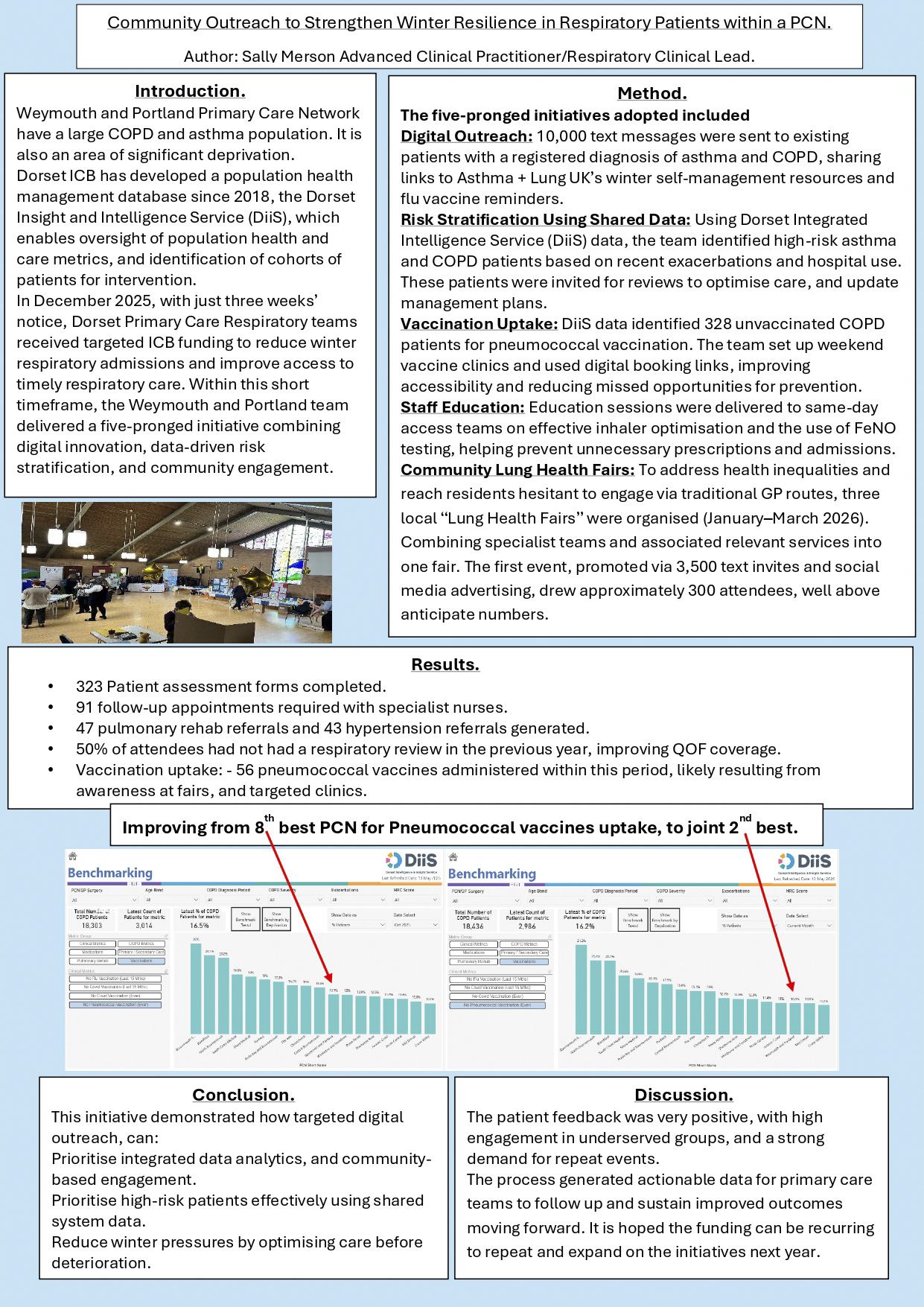
5. Community “Lung Health Fairs”: three multidisciplinary fairs with specialist nurses/clinicians provided drop in assessments and signposting; promotion used targeted texts, social media, and local advertising.
Results
• 323 QOF structured respiratory assessment forms completed.
• 91 follow up appointments with specialist nurses.
• 47 Pulmonary Rehabilitation and 43 Hypertension referrals generated.
• 50% of attendees had not received a respiratory review in the prior year, improving QOF coverage.
• 56 pneumococcal vaccinations delivered; PCN benchmarking improved from 8th to joint 2nd for pneumococcal uptake during the period suggesting successful uptake following awareness from fairs, and targeted clinics.
• High engagement from underserved groups and strong demand for repeat events
Conclusion
Rapid integrated respiratory care model using population health data and community engagement proved feasible and effective within a deprived PCN. Targeted SMS messaging and shared system risk stratification identified high risk patients, improved vaccination uptake, revealed unmet need, and generated actionable follow up data. Community Lung Health Fairs offered accessible multidisciplinary support, while staff education promoted consistent evidence based care. This approach may reduce winter pressures through intervention and stronger community collaboration. Seasonal funding could support implementation, although evaluation of admissions and cost effectiveness remains.
Funding: Dorset ICB winter pressure funding
Conflicts of interest: None