Is ambulatory oxygen therapy associated with unnecessary increased risks of adverse events, and do variable flow rates further increase these risks? An audit and population cohort study of a local home oxygen assessment service case load. (ID 764)
Whaddon Medical Centre
Abstract
Background and Aim
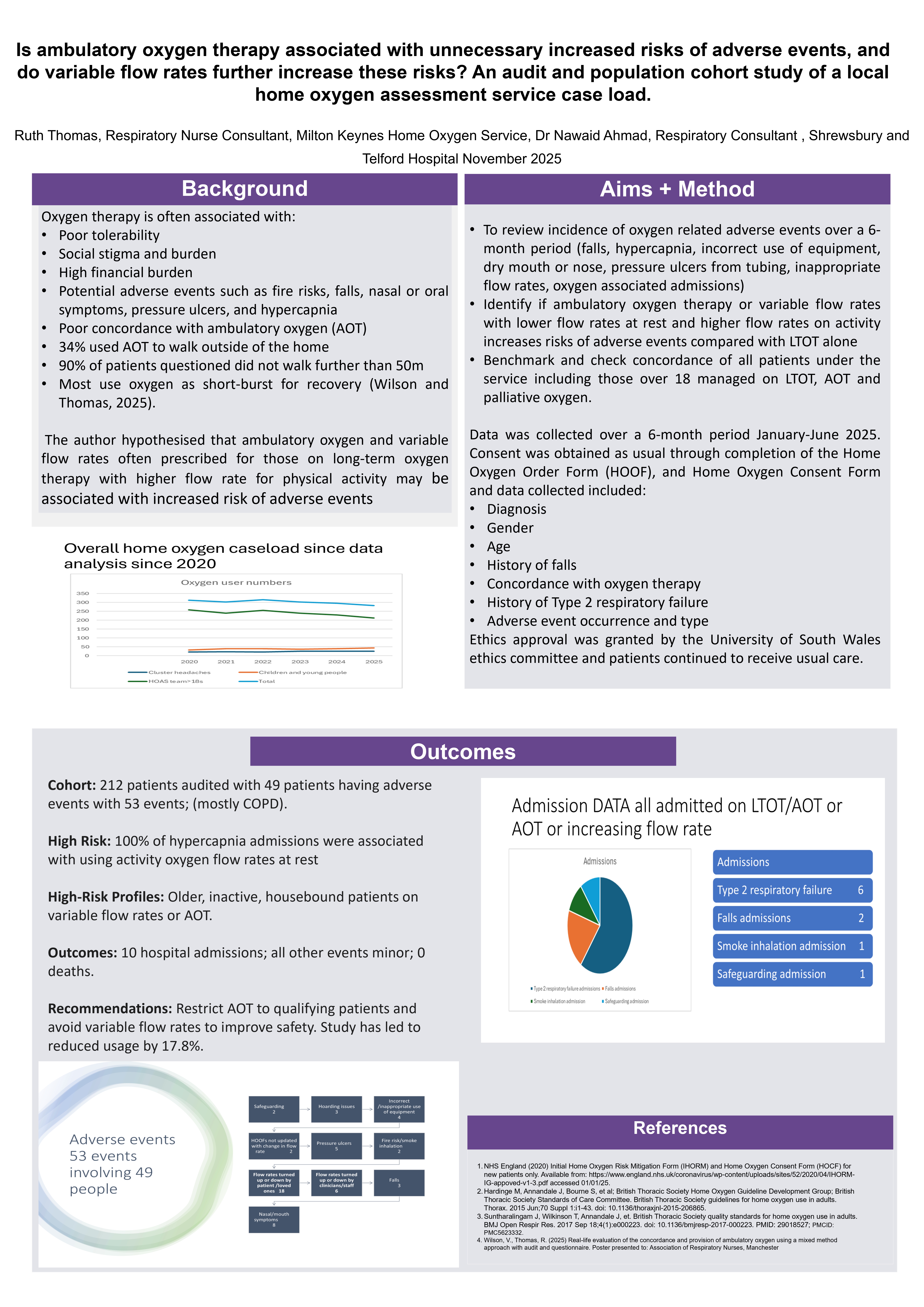
Oxygen therapy is often associated with poor tolerability, social stigma, and burden. Furthermore, it is an expensive treatment with a number of potential adverse events such as falls, nasal or oral symptoms, facial pressure ulcers, hypercapnia, and fire risks. The author hypothesised that ambulatory oxygen therapy (AOT) and variable flow rates often prescribed for those on long-term oxygen therapy (LTOT) with higher flow rates for physical activity may be associated with increased risk of adverse events.
Methods
The methodology included a literature review of oxygen therapy and associated significant incidents, as well as reviewing all patients under a British home oxygen service over a 6-month period to identify any adverse incidents. The data analysis benchmarked service delivery aligned with British Thoracic Society (BTS) home oxygen quality standards (2017).
Results
The literature review found no studies that researched adverse events associated with ambulatory oxygen or variable flow rates. Studies that looked at adverse events associated with LTOT found that events were often under reported with nasal symptoms being most common. Reassuringly, major or fatal incidents were far less common and included smoke inhalation, burns, and falls. This population-cohort study identified 53 adverse incidents with almost half associated with flow rates being inappropriately increased at rest.
Conclusions
Most incidents were minor, however, 10 resulted in admission, and 7 admissions were due to hypercapnia. Following BTS guidelines for ambulatory oxygen prescription and avoiding variable flow rates may mitigate risks of hypercapnia, and admissions, and allow cost savings in oxygen prescriptions.
Funding: None
Conflicts of interest: none