Evaluating the impact of an early palliative approach using Universal Care Plan for Chronic Obstructive Pulmonary Disease patients in South West London- Croydon Borough. (ID 768)
Croydon Health Services NHS Trust
Abstract
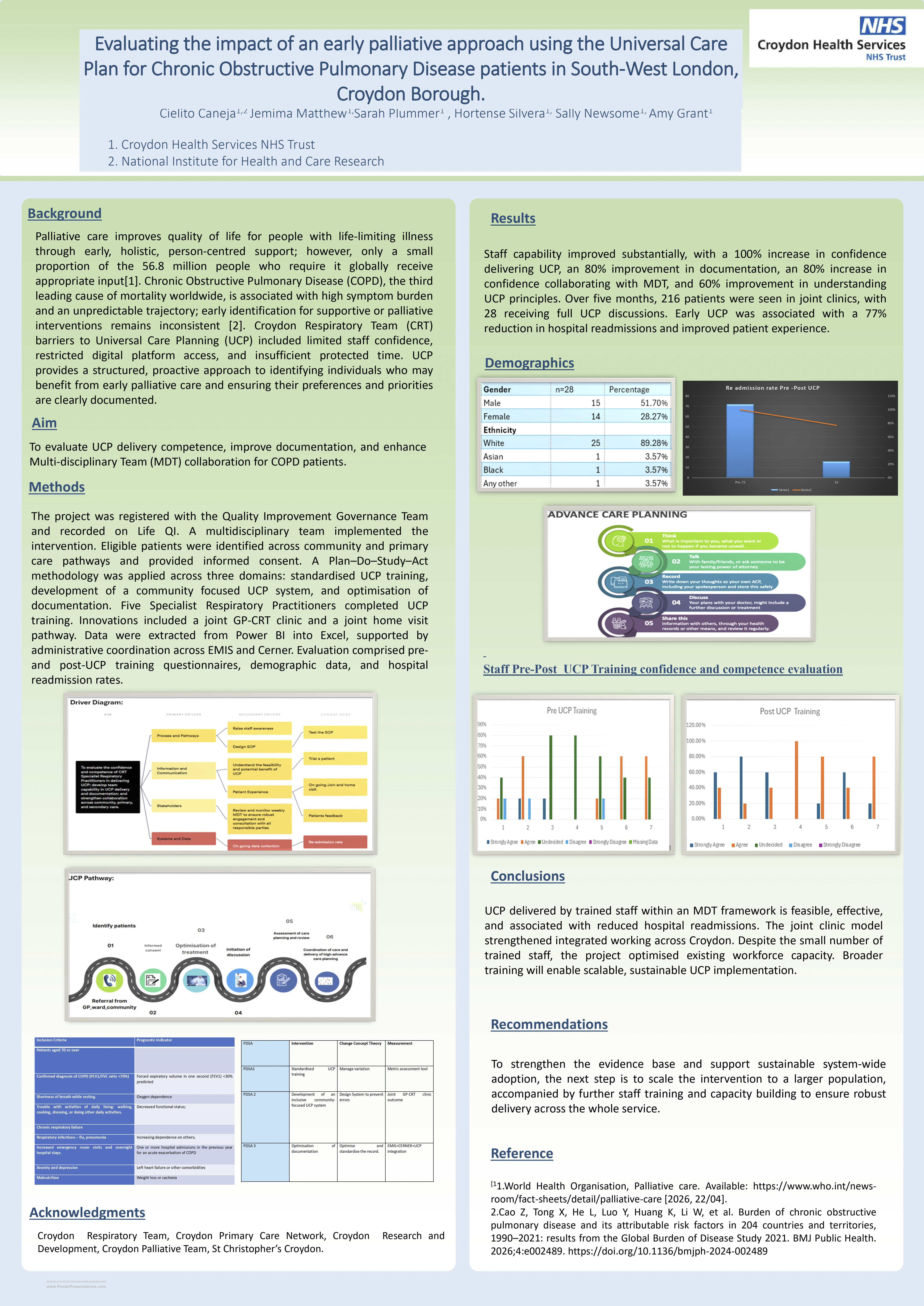
Background: Palliative care improves quality of life for people with life limiting illness through early, holistic, person centred support; however, only a small proportion of the 56.8 million people who require it globally receive appropriate input. Chronic Obstructive Pulmonary Disease (COPD), the third leading cause of mortality worldwide, is associated with high symptom burden and an unpredictable trajectory; early identification for supportive or palliative interventions remains inconsistent. Croydon Respiratory Team (CRT) barriers to Universal Care Planning (UCP) included limited staff confidence, restricted digital platform access, and insufficient protected time. UCP provides a structured, proactive approach to identifying individuals who may benefit from early palliative care and ensuring their preferences and priorities are clearly documented.
Aim: To evaluate UCP delivery competence, improve documentation, and enhance Multi-disciplinary Team (MDT) collaboration for COPD patients.
Method: The project was registered with the Quality Improvement Governance Team and recorded on Life QI. A multidisciplinary team implemented the intervention. Eligible patients were identified across community and primary care pathways and provided informed consent. A Plan–Do–Study–Act methodology was applied across three domains: standardised UCP training, development of a community focused UCP system, and optimisation of documentation. Five Specialist Respiratory Practitioners completed UCP training. Innovations included a joint GP-CRT clinic and a joint home visit pathway. Data were extracted from Power BI into Excel, supported by administrative coordination across EMIS and Cerner. Evaluation comprised pre and post training questionnaires, demographic data, and hospital readmission rates.
Results: Staff capability improved substantially, with a 100% increase in confidence delivering UCP, an 80% improvement in documentation, an 80% increase in confidence collaborating with MDT, and 60% improvement in understanding UCP principles. Over five months, 216 patients were seen in joint clinics, with 28 receiving full UCP discussions. Early UCP was associated with a 77% reduction in hospital readmissions and improved patient experience.
Conclusion: UCP delivered by trained staff within an MDT framework is feasible, effective, and associated with reduced hospital readmissions. The joint clinic model strengthened integrated working across Croydon. Despite the small number of trained staff, the project optimised existing workforce capacity. Broader training will enable scalable, sustainable UCP implementation.
Funding: None
Conflicts of interest: None