Rescue Pack prescribing for COPD a change in practice (ID 782)
Union Brae Medical Practice
Abstract
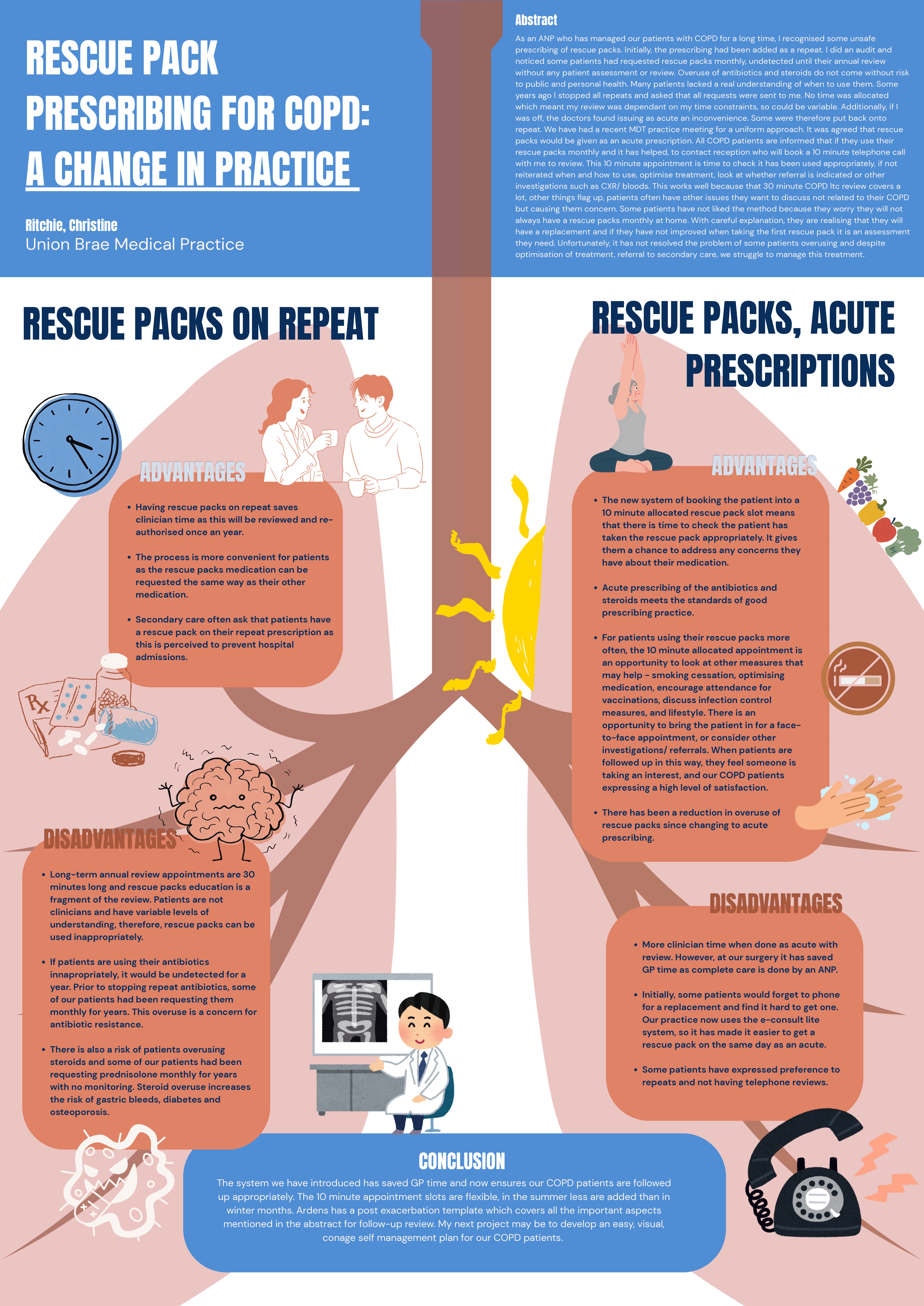
As a ANP who has managed our patients with COPD for a long time I recognised some unsafe prescribing of rescue packs. Initially the prescriptions had been added as repeat. I did an audit and noticed some patients had requested rescue packs monthly , undetected until their annual review without any patient assessment or review. Overuse of antibiotics and steroids do not come without risk to public and personal health. Many patients lacked a real understanding of when to use them. Some years ago I stopped all repeats and asked that all requests were sent to me. No time was allocated which meant my review was dependant on my time constraints so variable. Plus if I was off the doctors found issuing as acute an inconvenience .Some were put back onto repeat. We have had a recent MDT practice meeting for a uniform approach. It was agreed that rescue packs would be given as an acute prescription. All COPD patients are informed that if they use their rescue pack and it has helped,to contact reception who will book a 10 minute telephone call with me to review. This 10 minute appointment is time to check it has been used appropriately, if not reiterate when and how to use. Optimise treatment, look at whether referral is indicated or other investigations such as CXR / bloods. This works well because the 30 minute COPD ltc review covers a lot, other things flag up, patients often have other issues they want to discuss not related to their COPD but causing them concern. Some patients have not liked the method because worry they will not always have a rescue pack at home. With careful explanation they are realising that they will have a replacement and if they have not improved when taking the first rescue pack it is not another rescue pack they need it’s assessment.
Unfortunately it has not resolved the problem of some patients overusing and despite optimisation of treatment , referral to secondary care we struggle to manage these patients.
Funding: None
Conflicts of interest: None