COMET: COPD Targeted Management, Early Intervention and Treatment (ID 786)
Moreton & Meols PCN, Wirral
Abstract
Background: Underdiagnosis of COPD is common in the UK, especially in deprived communities (the “missing millions”). The Wirral is ranked among the more deprived local authorities in England, with approximately 23% of neighbourhoods classified as highly deprived, which exemplifies this challenge. NHS Lung Cancer Screening (LCS) presents an opportunity to target patients at high-risk of undiagnosed COPD.
Aim: To improve early identification and management of COPD by integrating a targeted COPD diagnostic pathway (COMET) utilising the results of the LCS programme, thereby enhancing patient outcomes and reaching underserved populations while reducing pressure on primary care.
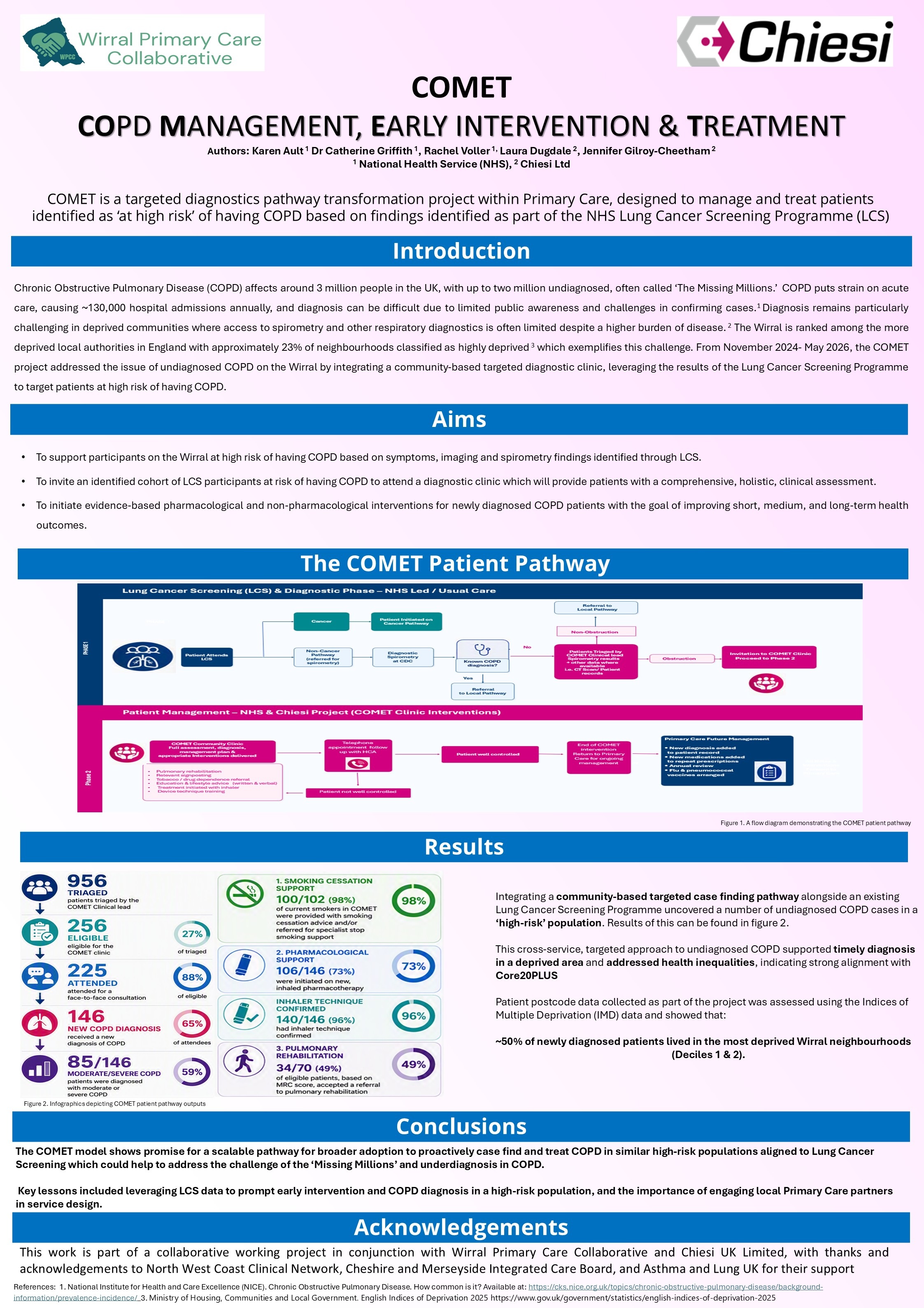
Intervention/Change: The COMET project (Nov 2024–May 2026) embedded a community-based diagnostic clinic for LCS participants meeting high-risk criteria for COPD. Patients referred by LCS for spirometry at a community diagnostic centre, had results triaged by the COMET clinical lead. Appropriate patients were invited into a dedicated diagnostic clinic for pharmacological and non-pharmacological interventions (e.g. smoking cessation support, pulmonary rehabilitation referrals).
Measures: The project tracked the number of LCS participants undergoing spirometry, the proportion identified for the COMET pathway, confirmed new COPD diagnoses, and the socio-economic profile of participants (Index of Multiple Deprivation, IMD) to evaluate reach into high-need groups.
Results: 956 patients who underwent spirometry following LCS were triaged by COMET’s clinical lead. Of these, 256 eligible, high-risk patients were invited to the COMET clinic and 225 attended. 146 (64.88%) received a new COPD diagnosis. 50% of newly diagnosed participants lived in the most deprived IMD deciles (1–2), ~69% in deciles 1–4. Only ~12% came from the least deprived deciles (9–10), indicating strong alignment with Core20PLUS5, successful engagement and targeting of high-inequality communities.
Learning: Integrating a targeted case-finding pathway into an existing screening programme uncovered a number of undiagnosed COPD cases in a deprived area. This cross-service, community-based approach helped address health inequalities and reduce diagnostic delays. Key lessons included leveraging routine screening data to prompt early intervention, and engaging local primary care partners in service design. The COMET model shows promise for broader adoption to proactively find and treat COPD in similar high-risk populations.
Funding: This was a collaborative working project involving a pooling of resource between Wirral Primary Care Collaborative and Chiesi Ltd
Conflicts of interest: None