Evaluating efficiency and acceptability of clinic-based care as an alternative to home visits in a community respiratory team: A pilot study (ID 788)
NHS Lothian
Abstract
Background:
Across Scotland’s health and care system, services face significant financial pressures, rising demand and workforce constraints (1). There is a growing need to deliver care more efficiently, while maintaining patient-centred support, prompting services to re-think traditional models and test new approaches.
In this context, Midlothian Community Respiratory Team piloted clinic-based appointments for suitable patients as an alternative to a fully home visit model, aiming to improve efficiency and increase capacity.
Methodology:
A structured clinic model was introduced, running a three hour session each Wednesday morning at a local GP practice (June–November 2025). Patients were invited by phone or letter to attend scheduled appointments, replacing staff home visits. Staff remained on site for patient appointments and data was collected regarding demographics, attendance, and acceptability feedback from patients and staff. This approach reduced the costs and time associated with a home visit model, allowing more patients to be seen. The clinic served as an alternative point in the care pathway for routine reviews and required only existing practice space, standard equipment, and usual staffing.
Aims:
1. To increase face to face patient contact by 6-8 patients per month over the course of the pilot
2. To evaluate the acceptability of delivering COPD care in a clinic setting for both patients and staff
Results:
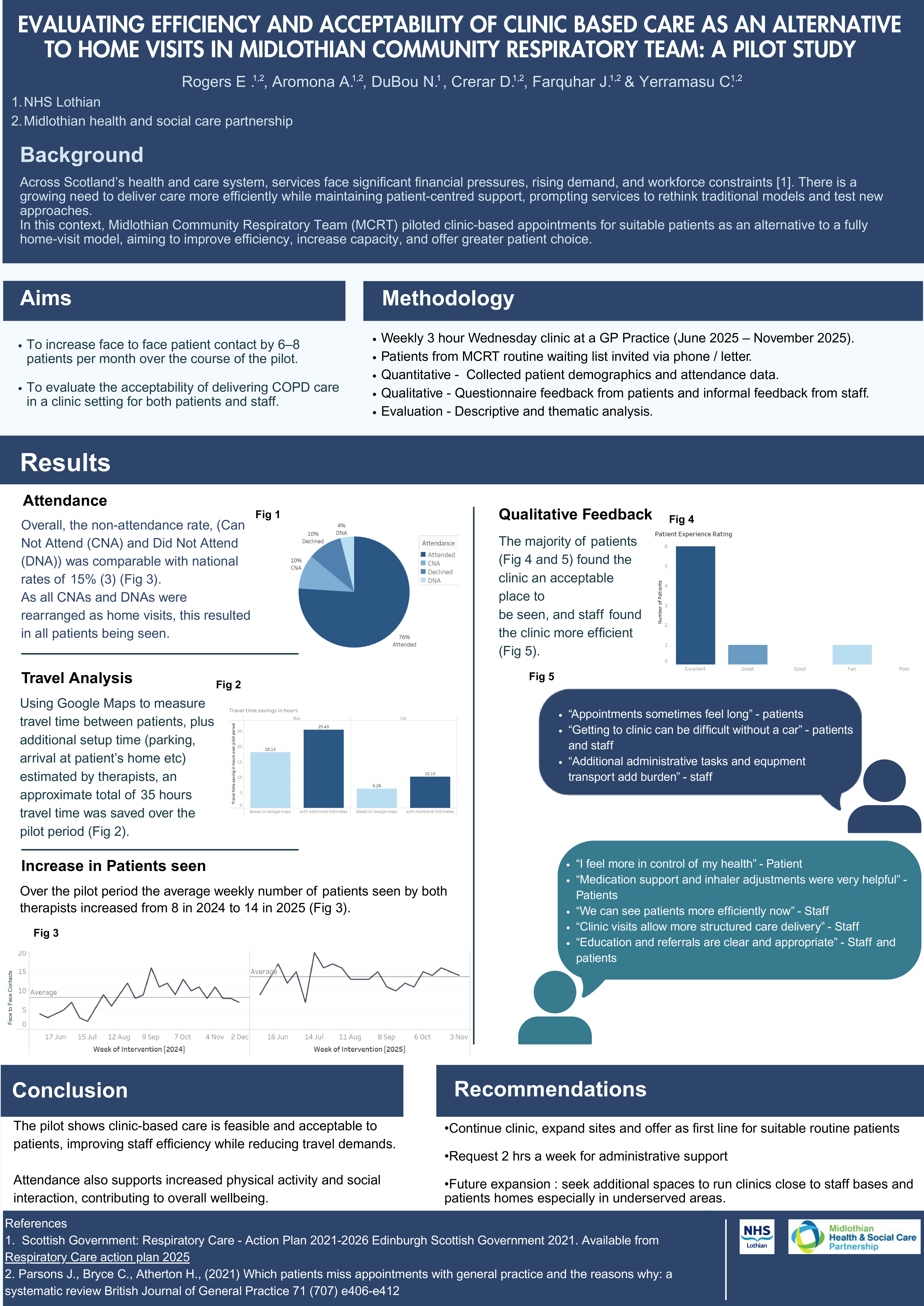
Overall, the non-attendance rate was comparable with national rates of 15% (2), though as non-attenders were rearranged as home visits; all patients were ultimately seen. Approximately 35 hours of travel time were saved over the period, and the number of patients seen increased by an average of 6 per week.
Qualitative feedback from patients indicated that patients found the support with medication and self-management to be helpful, and staff found the clinic to be more efficient. Greater detail of results is displayed in poster graphics. In conclusion, the clinic was very effective in increasing efficiency within the existing model without additional finances and significantly increased the number of patients seen. Patients and staff found it acceptable. To make greater gains, the recommendation is to expand the clinic model, with administrative support.
Funding: None
Conflicts of interest: None