Safety-Net Follow-up of Abnormal Chest Radiographs: A Retrospective Audit of Compliance with Follow-up Imaging Recommendations (ID 790)
Salford Royal Hospital
Abstract
Background
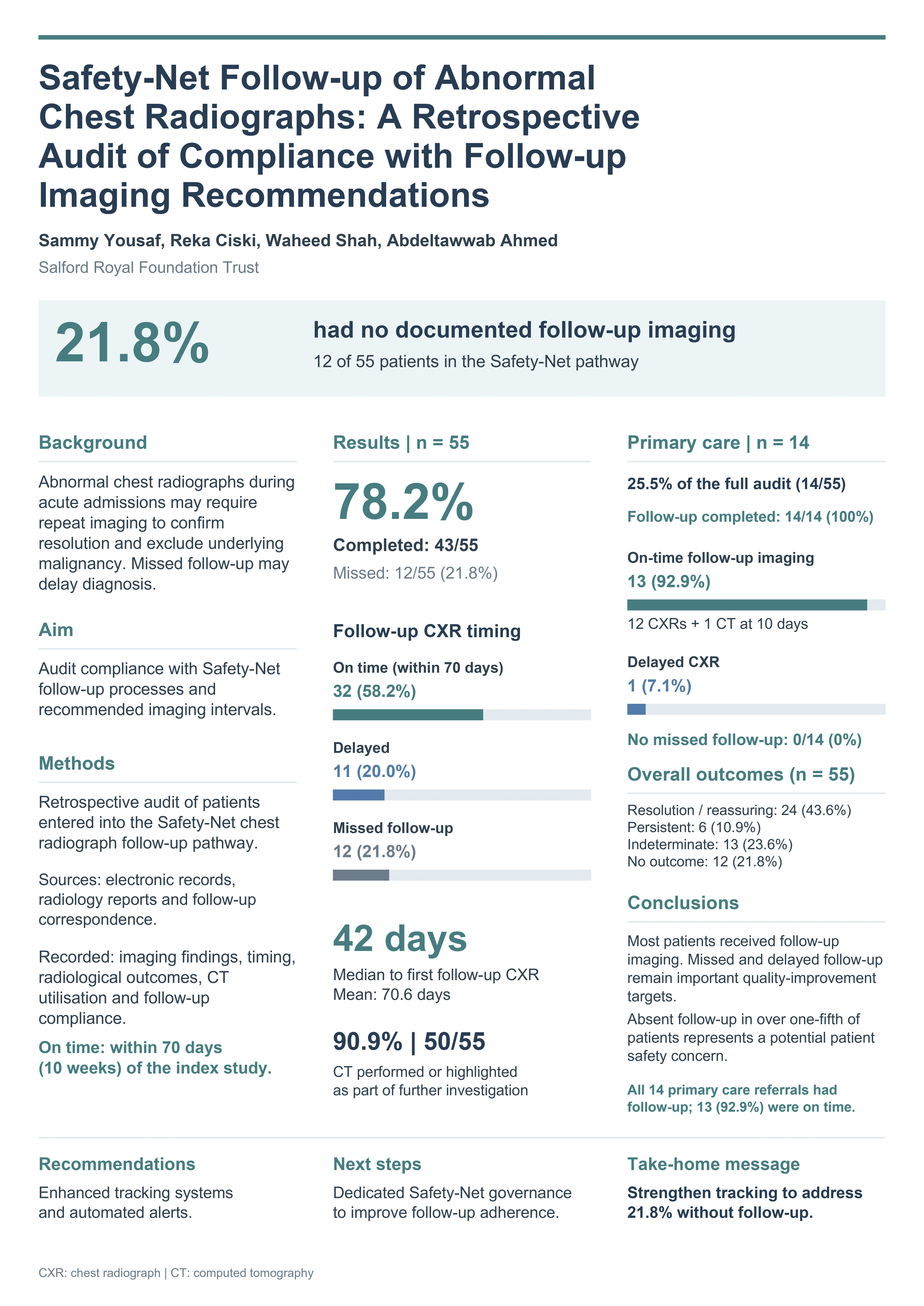
Abnormal chest radiographs performed during acute hospital admissions frequently require repeat imaging to confirm resolution and exclude underlying malignancy. BTS guidance recommends timely follow-up chest radiography, particularly following pneumonia or indeterminate radiographic abnormalities. Failure to complete follow-up imaging may delay diagnosis of significant underlying pathology. We audited compliance with Safety-Net follow-up processes within Salford Royal Foundation Trust.
Methods
A retrospective audit was undertaken of patients entered into the Safety-Net chest radiograph follow-up pathway. Data were collected from electronic records, radiology reports and follow-up correspondence. Variables recorded included patient demographics, initial chest imaging findings, timing of repeat imaging, radiological outcomes, CT thorax utilisation and compliance with recommended follow-up intervals. Follow-up chest radiographs performed within 70 days (10 weeks) of the index study were classified as on time.
Results
A total of 55 patients were included in the audit. Follow-up chest imaging was completed in 43/55 patients (78.2%), while 12/55 patients (21.8%) had no documented follow-up imaging and were considered missed follow-ups. Thirty-two patients (58.2%) underwent follow-up chest radiography within the recommended timeframe, while 11 patients (20.0%) had delayed imaging. The median time to first follow-up chest radiograph was 42 days (mean 70.6 days). CT chest imaging was performed or highlighted as part of further investigation in 50/55 patients (90.9%). Radiological outcomes demonstrated complete resolution or reassuring interval improvement in 24 patients (43.6%), persistent abnormalities requiring ongoing surveillance in 6 patients (10.9%), indeterminate findings in 13 patients (23.6%), and no outcome available in 12 patients (21.8%) due to absent follow-up imaging.
Conclusions
Most patients received follow-up imaging after identification of an abnormal chest radiograph; however, over one-fifth of patients had no documented follow-up, representing a potential patient safety concern. While compliance with recommended follow-up intervals was acceptable in those completing imaging, missed and delayed follow-up remains an important quality-improvement target. Enhanced tracking systems, automated alerts and dedicated Safety-Net governance processes may improve adherence to follow-up recommendations and reduce the risk of delayed diagnosis.
Funding: none
Conflicts of interest: none