The fit between asthma self-management implementation strategies and practice context– a case study within the IMP2ART cluster randomised controlled trial (ID 800)
University College London (UCL)
Abstract
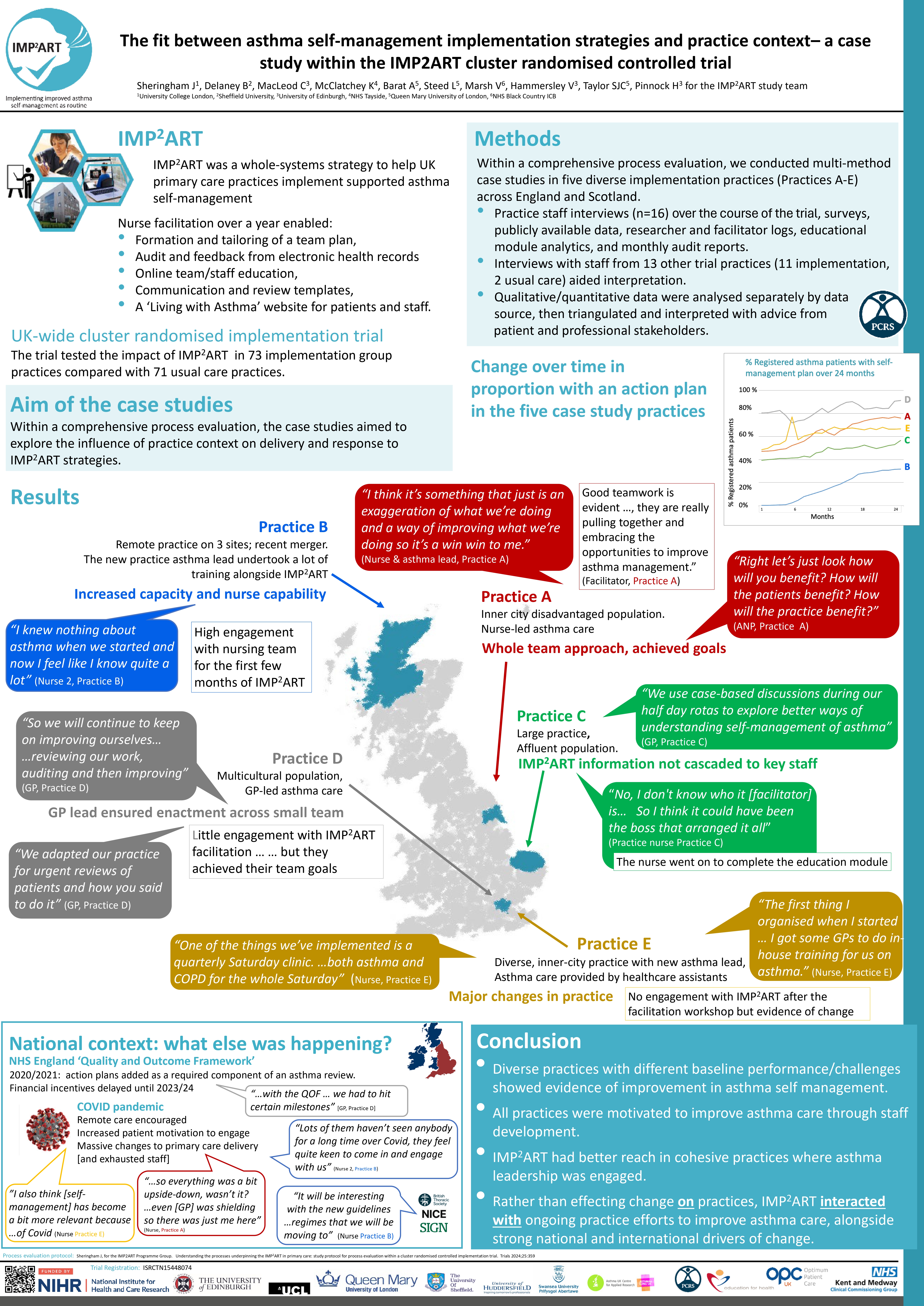
Background and aim: Supported self-management improves asthma outcomes but implementation in routine primary care clinical practice is poor. IMP2ART (IMPlementing IMProved Asthma self-management as RouTine) was a whole-systems strategy to help UK primary care practices implement supported asthma self-management. It includes nurse facilitation over a year enabling formation and tailoring of a team plan, regular audit and feedback from electronic health records, online team/staff education, communication and review templates, and a website for patients and staff. The effectiveness of IMP2ART overall was evaluated through a randomised controlled trial across 144 practices in England and Scotland. This case study – part of the comprehensive process evaluation - sought to understand the influence of practice context on delivery and response to IMP2ART strategies.
Methods: We conducted a multi-method case study in five diverse implementation practices across England and Scotland. Data on national and practice context and IMP2ART response were obtained from practice staff interviews (n=16), surveys, publicly available data, researcher and facilitator logs, educational module analytics, and monthly audit reports from electronic health records. Interviews with staff from non-case practices in the trial IMP2ART (n=13; 11 implementation, 2 control) aided interpretation. Qualitative and quantitative analyses were conducted separately by data source, then triangulated across data sources with advice from stakeholder meetings (including PCRS, patients).
Results: In all case study practices there was an increase in asthma action plan delivery over the course of the trial. Practices engaged with IMP2ART in different ways, often through instigating plans to target high-risk groups e.g. those with recent exacerbations or high salbutamol users. Engagement was strongest in practices which started with readiness to change and had scope to improve because of a low baseline and/or through increasing practice capability. Rather than effecting change on practices, IMP2ART interacted with ongoing practice efforts to improve asthma care, in the context of national and international factors (COVID-19, payment mechanisms (QOF) and clinical guidelines).
Conclusions: Diverse practices can tailor a whole systems approach to asthma self-management to add value to their ongoing work. Sustainable engagement and change are more likely in practices with strong asthma leadership and readiness to change.
Funding: The programme was funded by a National Institute for Health and Care Research Programme Grant for Applied Health Research (NIHR RP-PG-1016-20008)
Conflicts of interest: None