Is ambulatory oxygen necessary and utilized on post hospital discharge (ID 807)
Whaddon Medical Centre
Abstract
Background:
Ambulatory oxygen therapy (AOT) is recommended for selected patients with exertional desaturation who demonstrate symptomatic or functional benefit. In practice, AOT is sometimes prescribed at hospital discharge alongside long-term oxygen therapy (LTOT), or as a standalone intervention. However, the appropriateness and real-world uptake of ambulatory oxygen initiated at discharge is unclear.
Aim:
To evaluate whether prescribing ambulatory oxygen at hospital discharge is appropriate and necessary, and to assess patient use of ambulatory oxygen following discharge.
Methods:
A retrospective review was undertaken of 40 patients discharged from hospital with newly prescribed ambulatory oxygen, either alone or in combination with LTOT. All patients currently under the home oxygen assessment service (HOAS) had their notes audited.
Results:
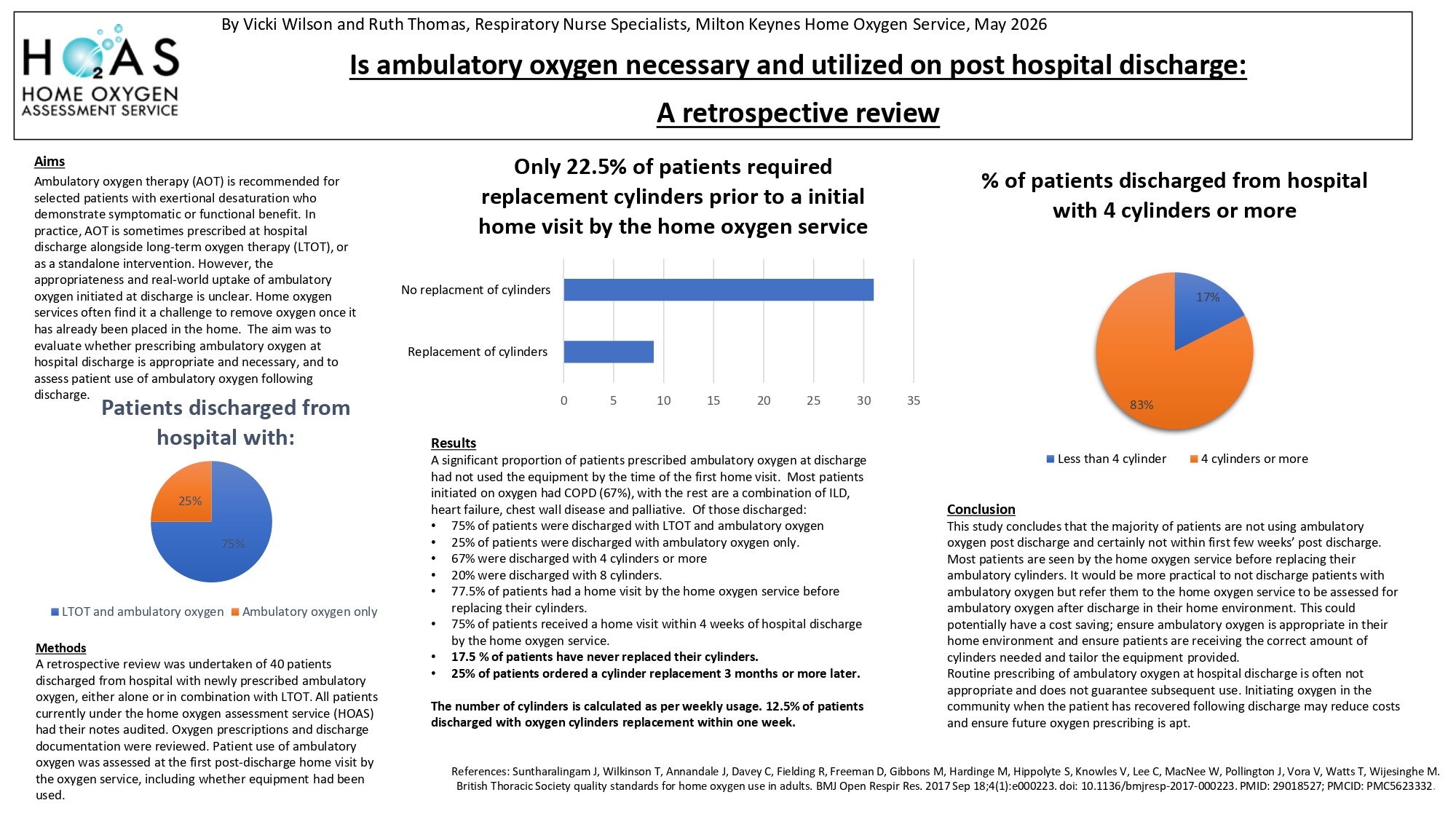
A significant proportion of patients prescribed ambulatory oxygen at discharge had not used the equipment by the time of the first home visit. Most patients initiated on oxygen had COPD (67%), with the rest are ILD, heart failure, chest wall disease and palliative. Of those discharged:
• • 75% of patients were discharged with LTOT and ambulatory oxygen
• 25% of patients were discharged with ambulatory oxygen only.
• 67% were discharged with 4 cylinders or more
• 20% were discharged with 8 cylinders.
• 77.5% of patients had a home visit by the home oxygen service before replacing their cylinders.
• 75% of patients received a home visit within 4 weeks of hospital discharge by the home oxygen service.
• 17.5 % of patients have never replaced their cylinders.
• 25% of patients ordered a cylinder replacement 3 months or more.
Conclusion:
This study concludes that the majority of patients are not using ambulatory oxygen post discharge and certainly not within first few weeks’ post discharge. Most patients are seen by the home oxygen service before replacing their ambulatory cylinders.
Routine prescribing of ambulatory oxygen at hospital discharge is often not appropriate and does not guarantee subsequent use. Initiating oxygen in the community when the patient has recovered rather than on hospital discharge may reduce costs and ensure future oxygen prescribing is apt.
Funding: No funding required
Conflicts of interest: None