Reducing health inequalities in pulmonary rehabilitation with social prescribing. (ID 814)
Guys and St Thomas Trust
Abstract
Background: Pulmonary rehabilitation (PR) is the cornerstone of chronic respiratory disease management. Social deprivation is the biggest risk factor for developing respiratory disease and highly associated with reduced PR enrolment and completion.
Aim: This quality improvement project aimed to address health inequalities and social deprivation in cohorts eligible for PR by implementing a social prescribing link worker (SPLW) within an integrated respiratory team in a South London hospital.
Methods: Referrals were received from respiratory clinicians working with patients eligible for PR in inpatient, outpatient and community settings. All patients triaged for PR were offered support from the SPLW. Appointments were face- to-face, via telephone or at home. The SPLW offered tailored input addressing social determinants of health.
Results: 218 patients were supported between March 2025 and June 2026 (median age 63; 53% female; 60% white; 40% global majority; 67% COPD diagnosis).
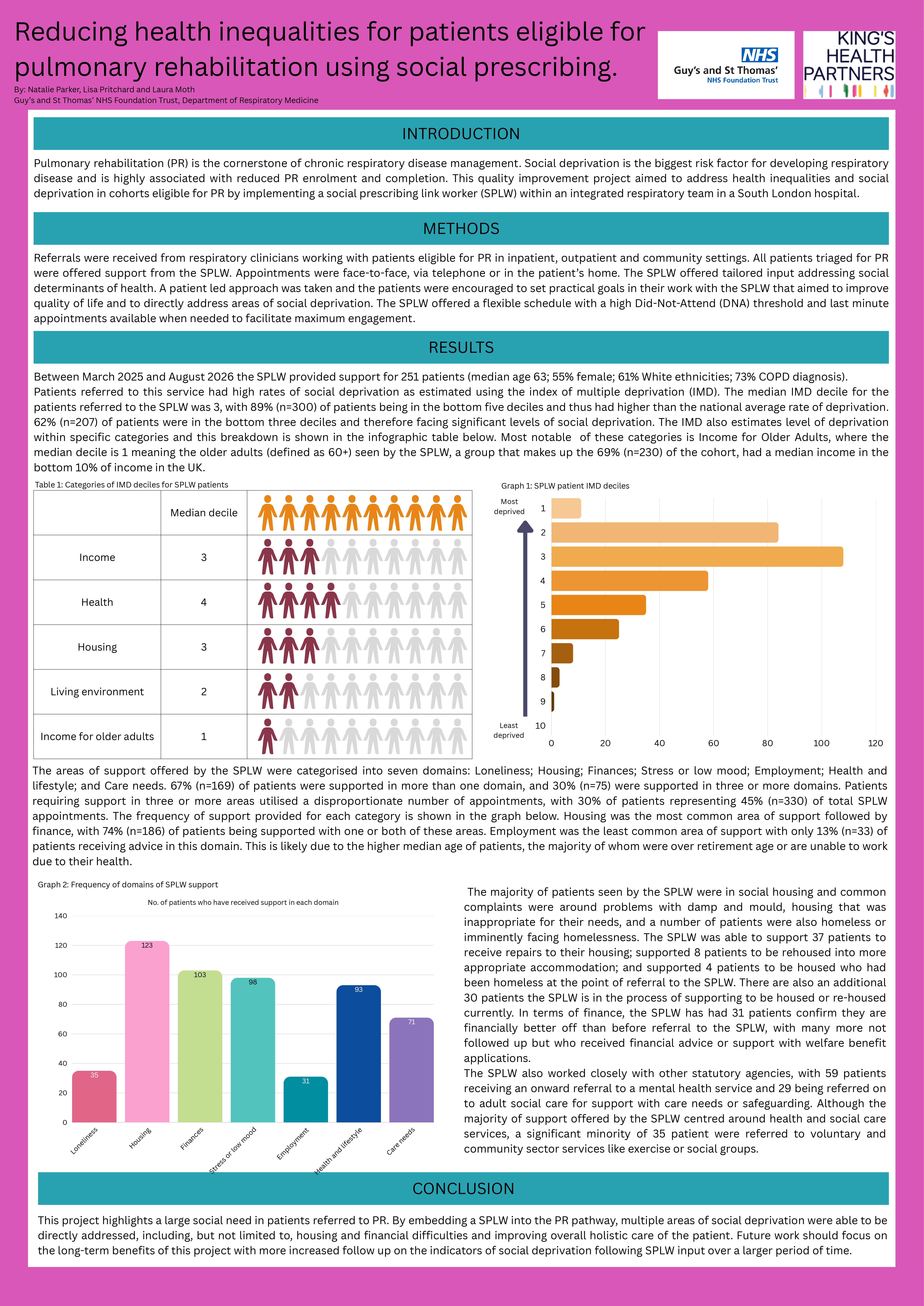
Referred patients had high rates of deprivation and social complexity with a median index of multiple deprivation (IMD) decile of 3. 89% were in the bottom five deciles and 62% in the bottom three.
Areas of support were categorised into seven domains as per figure 1. 67% of patients were supported in more than one domain and 32% supported in three or more domains. These multi-need patients utilised a disproportionate number of appointments, representing 47% (n=278) of total SPLW appointments. Housing was the most common need identified (48%; figure 1). Support included 22 patients receiving repairs or adaptations to their housing and 10 patients being re-housed, of whom three had been homeless at the point of referral.
Financial problems were the second most common domain identified and alongside advice and signposting, the SPLW assisted 25 patients to an improvement in income.
Conclusions: This project highlights a large social need in patients referred to PR. By embedding a SPLW into the PR pathway, multiple areas of social deprivation were able to be addressed, including, but not limited to, housing and financial difficulties, improving overall holistic care of the patient. Future work should focus on the long-term benefits of this project.
Funding: There was no direct funding for this research as the funding came from the service which was funded by King's Health Partner's Mind and Body team.
Conflicts of interest: None