Improving COPD Rescue Pack Management in a Deprived Primary Care Network: A Pharmacy Technician-Led Pilot (ID 825)
Liverpool First Primary Care Network
Abstract
Background:
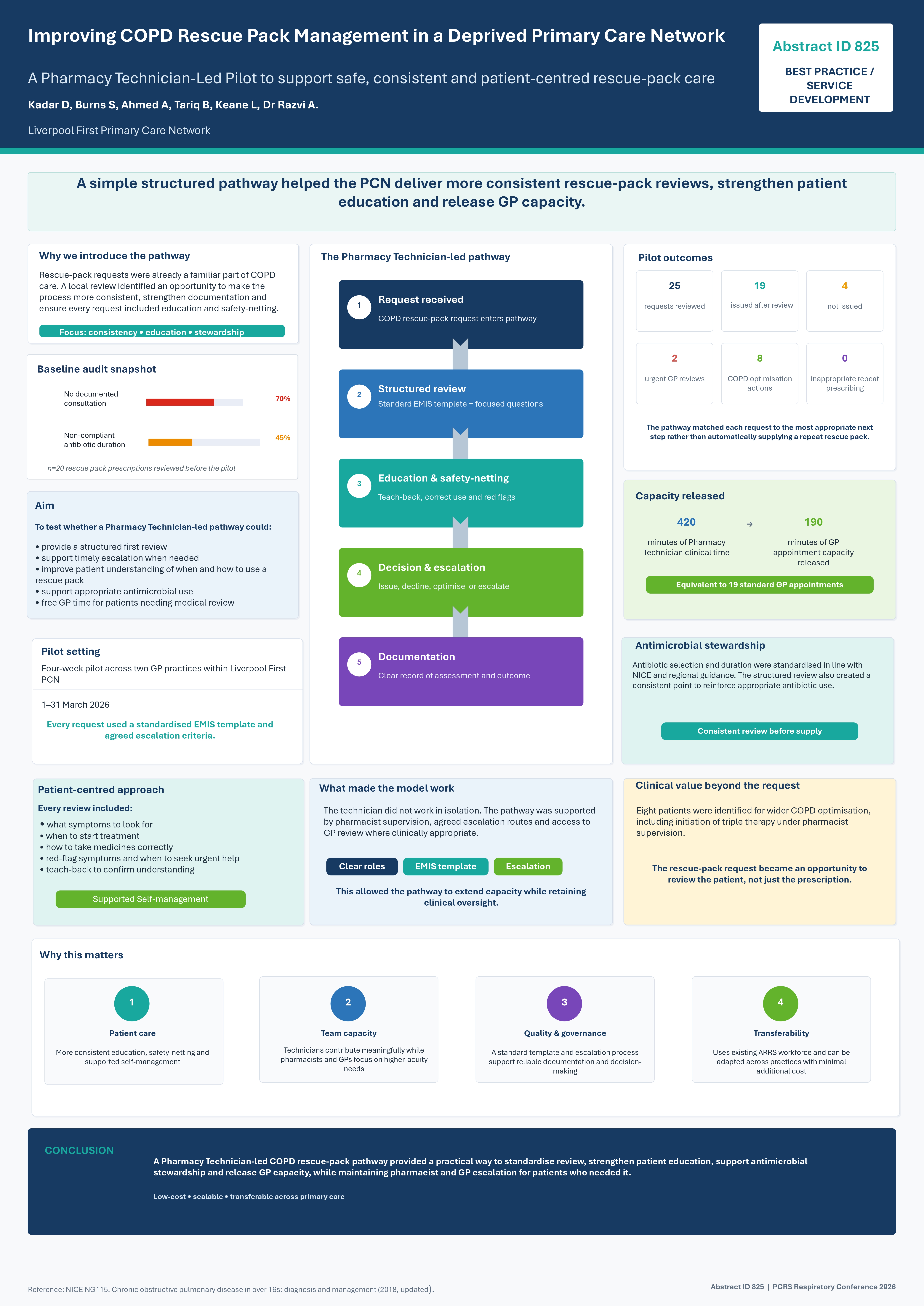
COPD rescue packs are widely used in primary care to support self-management of exacerbations. An antimicrobial prescribing audit identified COPD rescue pack prescribing as a key concern within a socioeconomically deprived PCN. Review of 20 rescue pack prescriptions found that 70% lacked a documented clinical consultation and 45% were not compliant with NICE-recommended antibiotic durations. Antibiotic and prednisolone prescribing varied, with treatment not consistently matched to clinical need. We hypothesised that a Pharmacy Technician-led COPD rescue pack pathway could strengthen prescribing governance, standardise prescribing, enhance patient education, and reduce GP workload
Methods:
A Pharmacy Technician-led COPD rescue pack pathway was piloted across two GP practices within a socioeconomically deprived Primary Care Network between 1–31 March 2026. All rescue pack requests underwent structured Pharmacy Technician assessment using a standardised EMIS template and escalation criteria. Reviews included clinical assessment, patient education, and safety-netting, with escalation of patients presenting with red-flag symptoms.
Results:
During the four-week pilot, 25 rescue pack requests were reviewed. Nineteen were issued following assessment, four were declined due to concerns regarding suitability and safe use, and two patients required urgent GP review. Antibiotic selection and duration were standardised in line with NICE and regional guidance. Eight patients required COPD optimisation, including initiation of triple therapy inhalers under pharmacist supervision. The pathway utilised approximately 420 minutes of Pharmacy Technician clinical time and released 190 minutes of GP appointment capacity, equivalent to 19 standard GP appointments. The intervention eliminated inappropriate repeat rescue-pack prescribing within participating practices. Structured education and safety-netting advice were delivered to all patients using a teach-back approach, improving confidence in self-management and recognition of symptoms requiring urgent medical review.
Conclusions:
A Pharmacy Technician-led COPD rescue pack pathway strengthened prescribing governance, enhanced patient education, and released GP capacity. The intervention demonstrated potential to improve antimicrobial stewardship through standardised clinical review, appropriate antibiotic prescribing, and elimination of inappropriate repeat rescue-pack prescribing. The model is low-cost, scalable, and transferable using the existing PCN Additional Roles Reimbursement Scheme(ARRS) workforce.
Reference:
NICE NG115. Chronic obstructive pulmonary disease in over 16s: diagnosis and management (2018, updated).
Funding: None
Conflicts of interest: None