Improving COPD Outcomes in Primary Care Through Holistic Reviews, Inhaler Optimisation and Multimorbidity Management (ID 828)
Priory Medical Group, Haxby Group Practice, Selby Town PCN and York Medical Group in York, North Yorkshire
Abstract
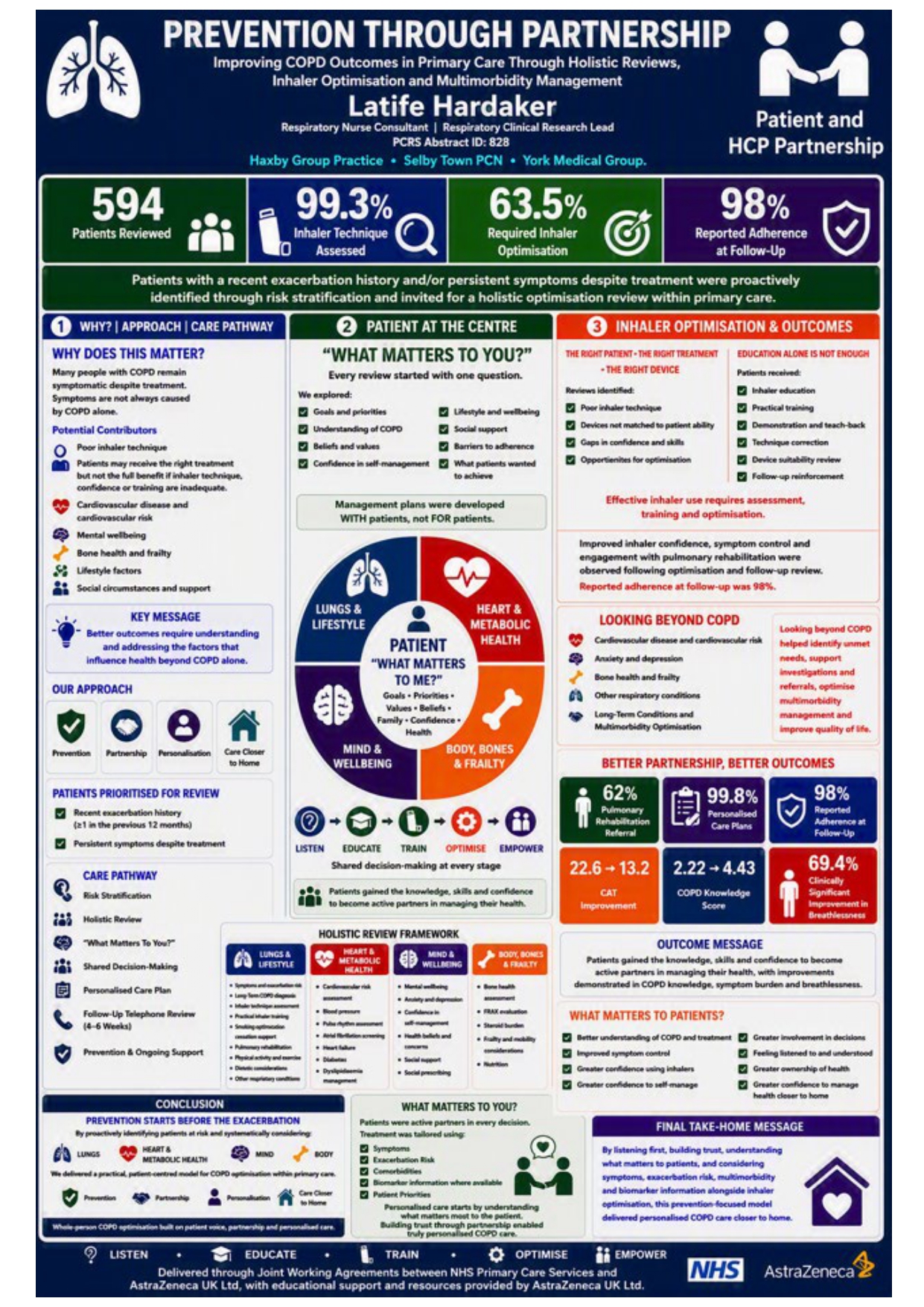
Optimising COPD outcomes requires more than treatment escalation—it requires getting the basics right and systematically addressing multimorbidity. Many patients with COPD remain symptomatic despite treatment (GOLD), often due to suboptimal inhaler technique, poor adherence and under-recognised comorbidity. We implemented holistic COPD optimisation clinics across primary care networks using a structured, multidimensional approach addressing respiratory, cardiovascular, psychological and bone health within a single framework (lungs, heart, mind and bones).
High-risk patients received a structured 30‑minute face‑to‑face review followed by a 4–6‑week 10‑minute telephone consultation. Assessments incorporated four key domains: exacerbation risk (lungs), cardiovascular risk (heart), mental health (mind) and bone health (bones). Reviews included symptom burden (CAT/mMRC), inhaler technique using teach-back, treatment optimisation, cardiovascular screening (atrial fibrillation, heart failure, blood pressure and QRISK), psychological wellbeing and social factors. Bone health was assessed using fracture risk (FRAX), with DEXA scanning requested in patients at risk, including those receiving ≥3 courses of oral corticosteroids within 12 months. Care was delivered using shared decision-making and personalised care planning tailored to individual patient priorities.
Across 594 patients reviewed, inhaler technique was assessed in 99.3%, with 63.5% requiring optimisation and 98% reporting adherence at follow-up. Follow-up was delivered by different healthcare professionals, reflecting real-world practice. Improvements were observed in symptom control, patient understanding and treatment satisfaction, with increased confidence in self-management. Increased engagement was seen with pulmonary rehabilitation, smoking cessation and social prescribing.
Multimorbidity was frequently identified, contributing to poor outcomes if unrecognised and untreated. Reviews consistently returned to fundamentals, reinforcing diagnosis, optimising inhaler technique and systematically addressing the four key domains.
This structured, holistic COPD optimisation model is practical for primary care and demonstrates that focusing on fundamentals alongside multimorbidity can deliver meaningful improvements in patient outcomes, experience and engagement within routine NHS care.
Funding: This work forms part of the LOGIC programme, delivered through collaborative working between NHS services and AstraZeneca. All clinical decisions were made independently by NHS clinicians.
Conflicts of interest: The LOGIC programme was delivered through collaborative working between NHS services and AstraZeneca; all clinical decisions were NHS-led with no external influence on clinical care. The author has undertaken advisory, research and educational work with pharmaceutical organisations; these activities did not influence the design, conduct or reporting of this work.