A service improvement project to harness the benefits of ICS/Formoterol reliever therapy for patients attending the Emergency Department for acute exacerbations of asthma (ID 830)
Portsmouth Hospitals University NHS Trust
Abstract
Background:
Acute asthma exacerbations remain a major cause of emergency department (ED) attendance and contribute substantially to healthcare utilisation. Despite evidence that optimising asthma treatments following an exacerbation reduces the risk of future attacks, treatment changes are frequently deferred to primary care or specialist follow-up, representing a missed opportunity to improve outcomes. We evaluated the implementation of an asthma exacerbation discharge box designed to facilitate immediate initiation of ICS/formoterol reliever therapy within our ED.
Methods:
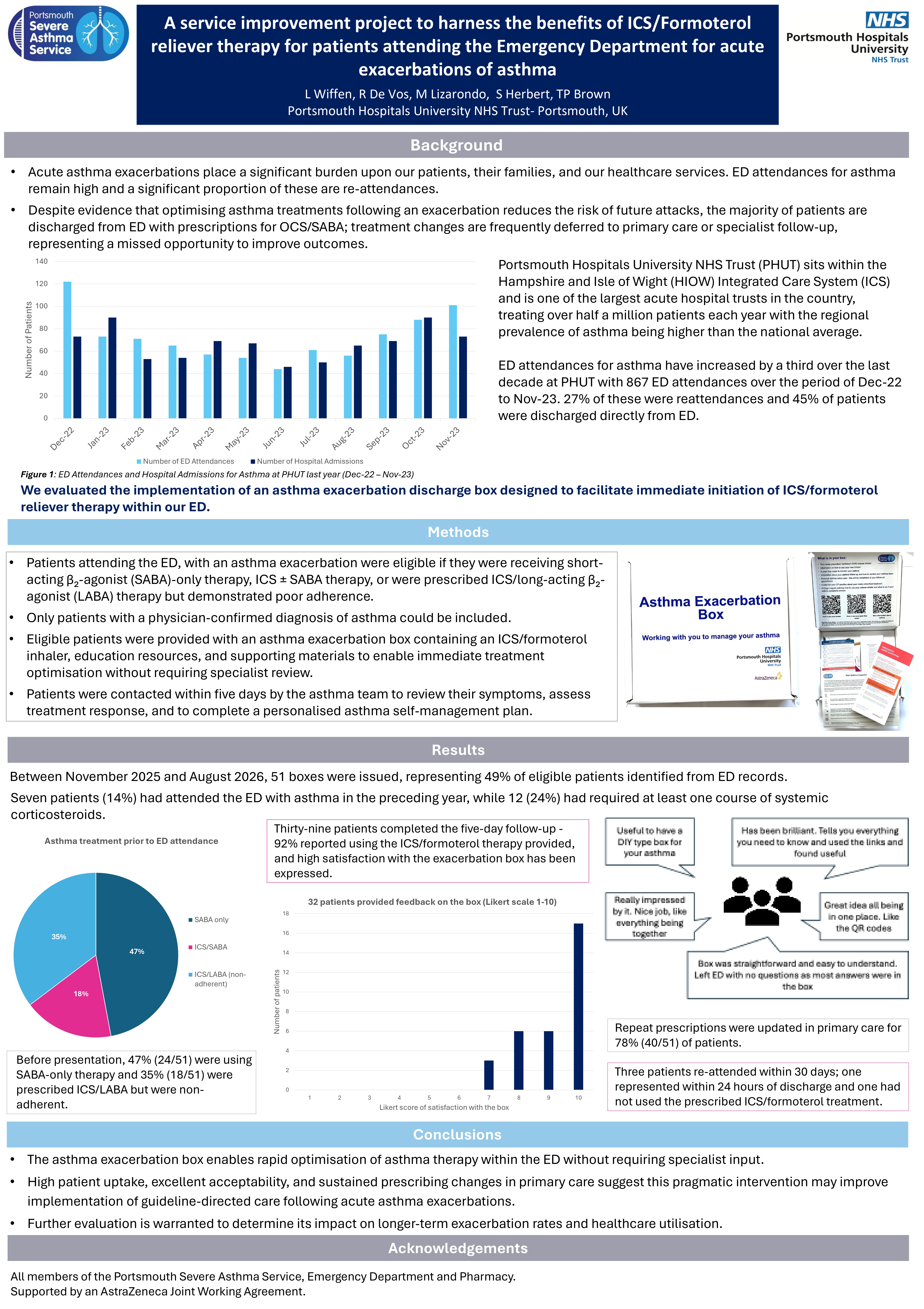
Patients attending the ED, with an asthma exacerbation were eligible if they were receiving short-acting β₂-agonist (SABA)-only therapy, ICS ± SABA therapy, or were prescribed ICS/long-acting β₂-agonist (LABA) therapy but demonstrated poor adherence. Eligible patients were provided with an asthma exacerbation box containing an ICS/formoterol inhaler, education resources, and supporting materials to enable immediate treatment optimisation without requiring specialist review (Fig1). Patients were contacted within five days by the asthma team to review their symptoms, assess treatment response, and to complete a personalised asthma self-management plan.
Results:
Between November 2025 and June 2026, 48 boxes were issued, representing 49% of eligible patients identified from ED records. Before presentation, 46% (22/48) were using SABA-only therapy and 38% (18/48) were prescribed ICS/LABA but were non-adherent (Fig2). Six patients (13%) had attended the ED with asthma in the preceding year, while 12 (25%) had required at least one course of systemic corticosteroids. Thirty-five patients completed the five-day follow-up; 91% reported using the ICS/formoterol therapy provided, and all expressed high satisfaction with the intervention (Fig2). Repeat prescriptions were updated in primary care for 73% (35/48) of patients. Two patients re-attended within 30 days; one represented within 24 hours of discharge, while the other had not used the prescribed ICS/formoterol treatment.
Conclusions:
The asthma exacerbation box enables rapid optimisation of asthma therapy within the ED without requiring specialist input. High patient uptake, excellent acceptability, and sustained prescribing changes in primary care suggest this pragmatic intervention may improve implementation of guideline-directed care following acute asthma exacerbations. Further evaluation is warranted to determine its impact on longer-term exacerbation rates and healthcare utilisation.
Funding: This project was supported by AstraZeneca through a joint working agreement.
Conflicts of interest: None