Beyond trial outcomes: Contextual insights into the IMP2ART trial findings (ID 844)
The University of Edinburgh
Abstract
Background: The IMP2ART (IMProving IMPlementation of Asthma self-management as Routine) cluster-randomised trial tested a whole-systems strategy to promote implementation of supported asthma self-management in UK primary care. Delayed by the COVID-19 pandemic, recruitment commenced in April 2021 whilst primary care – and society - was slowly returning to normal. The IMP2ART strategy was adapted to reflect the context with remote delivery of facilitation; patient/professional/patient resources were adapted to reflect post-COVID practice. Using routine data, the trial, concluded that the strategy had no impact on unscheduled care, provision of action plans or the secondary outcomes.
Aim: to describe the contextual changes influencing primary care asthma management and to explore the impact of context on trial outcomes.
Methods: We recruited 144 practices to the IMP2ART trial (69/67 completed from implementation/control groups respectively). We reviewed clinical guidelines and health policy at the start, midpoint and end of trial, analysed outcome data (routine data from 137 practices (n=51,335 people with active asthma), and explored quantitative/qualitative process evaluation data for relevant insights. Analyses were triangulated across sources.
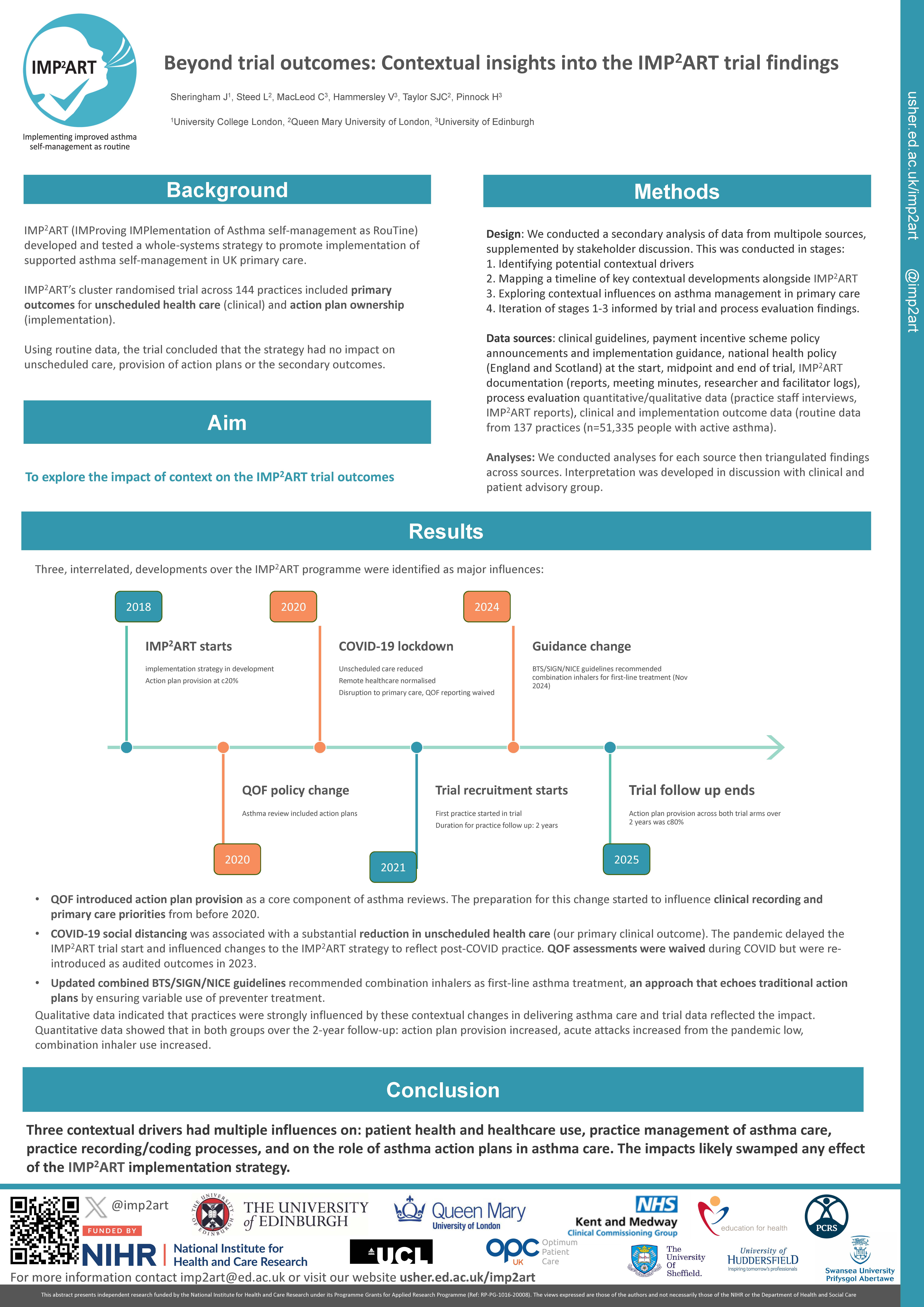
Results: Three major contextual changes were noted during the trial:
• Changes to QOF (in England). In 2020/2021, QOF introduced action plan provision (our primary implementation outcome) as a core component of asthma reviews.
• COVID-19. Social distancing during the pandemic was associated with a substantial reduction in unscheduled care (our primary clinical outcome). QOF assessments were waived during COVID, but were re-introduced as audited outcomes in 2023 (midway through the trial).
• Updated national guidelines. Publication of BTS/SIGN/NICE (November 2024 towards end of trial follow-up) recommended combination inhalers as first-line asthma treatment (an approach that echoes traditional action plans by ensuring variable use of preventer treatment).
Qualitative data indicated that practices were strongly influenced by these contextual changes in delivering asthma care and trial data reflected the impact. In both groups over the 2-year follow-up: action plan provision increased, acute attacks increased from the pandemic low, combination inhaler use increased.
Conclusion: The combined impact of these contextual drivers was substantial and likely swamped any effect of the IMP2ART implementation strategy.
Funding statement: Funding: NIHR RP-PG-1016-20008 (ISRCTN 15448074)
Funding: Funding: NIHR Programme Grant for Applied Research: RP-PG-1016-20008
Conflicts of interest: None