Reaching the “Unreached”: A Pharmacist-Led Community Respiratory Service Improving Equity and Outcomes in Childhood Asthma (ID 846)
Dudley Integrated Health and Care NHS Trust
Abstract
Background:
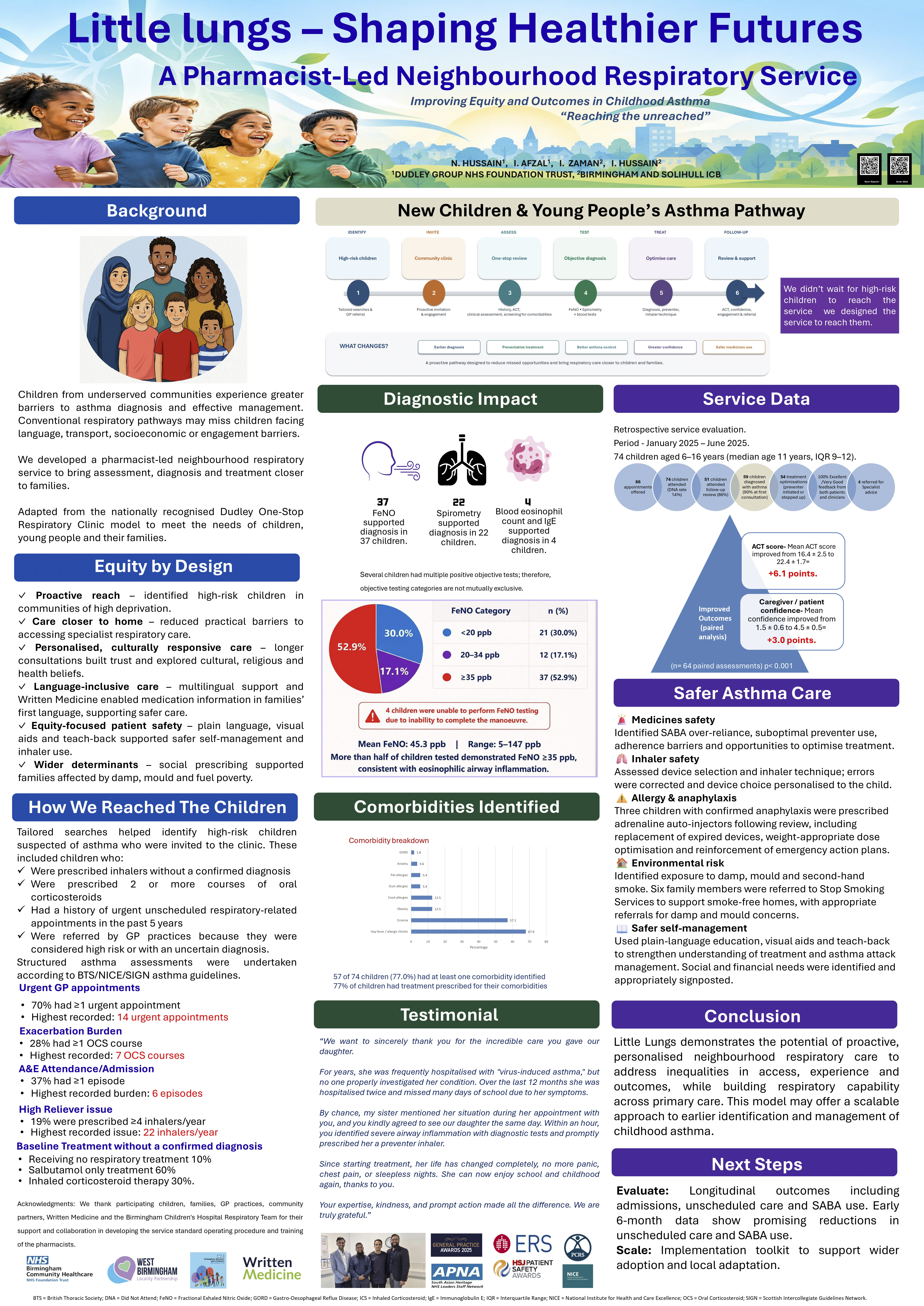
Childhood asthma disproportionately affects underserved populations, resulting in delayed diagnosis, suboptimal management, and limited access to specialist care. Traditional healthcare models often fail to engage these communities effectively. *Little Lungs – Shaping Healthier Futures* is a pharmacist-led, community-based initiative providing proactive, culturally sensitive asthma care directly within underserved neighbourhoods.
Methods:
We evaluated a neighbourhood-based service targeting children at high risk of asthma, co-designed in partnership with a tertiary care centre. Community outreach clinics delivered diagnosis (using fractional exhaled nitric oxide [FeNO] and spirometry), treatment initiation, asthma education, and follow-up within a single clinic. The intervention incorporated proactive case-finding, structured asthma reviews, inhaler technique assessment, culturally tailored education, caregiver support, and identification and management of comorbidities. Outcomes included timeliness of diagnosis and treatment initiation, reliever and oral corticosteroid use, symptom control, inhaler technique, caregiver confidence, and comorbidity management.
Results:
The service facilitated earlier and more accurate asthma diagnosis with timely initiation of treatment. Reliever inhaler use decreased, while symptom control and inhaler technique improved. Comorbidities were identified and managed more frequently, and caregivers reported increased confidence in recognising and managing exacerbations. High levels of engagement were achieved by delivering care within local communities, reducing barriers to access rather than viewing families as "hard to reach."
Conclusions:
A pharmacist-led, community outreach model can improve childhood asthma diagnosis, optimise treatment, and empower families to manage asthma effectively. By prioritising equity and delivering care where families live, this model provides a scalable blueprint for neighbourhood-based respiratory services that can help reduce health inequalities.
Funding: PCN funded
Conflicts of interest: Main author on Executive committee of PCRS.