Understanding the burden of Chronic Cough and Chronic Breathlessness: Data Insights from the CLEAR Elective Care Respiratory Neighbourhood Extension Programme (ID 849)
33n
Abstract
Background
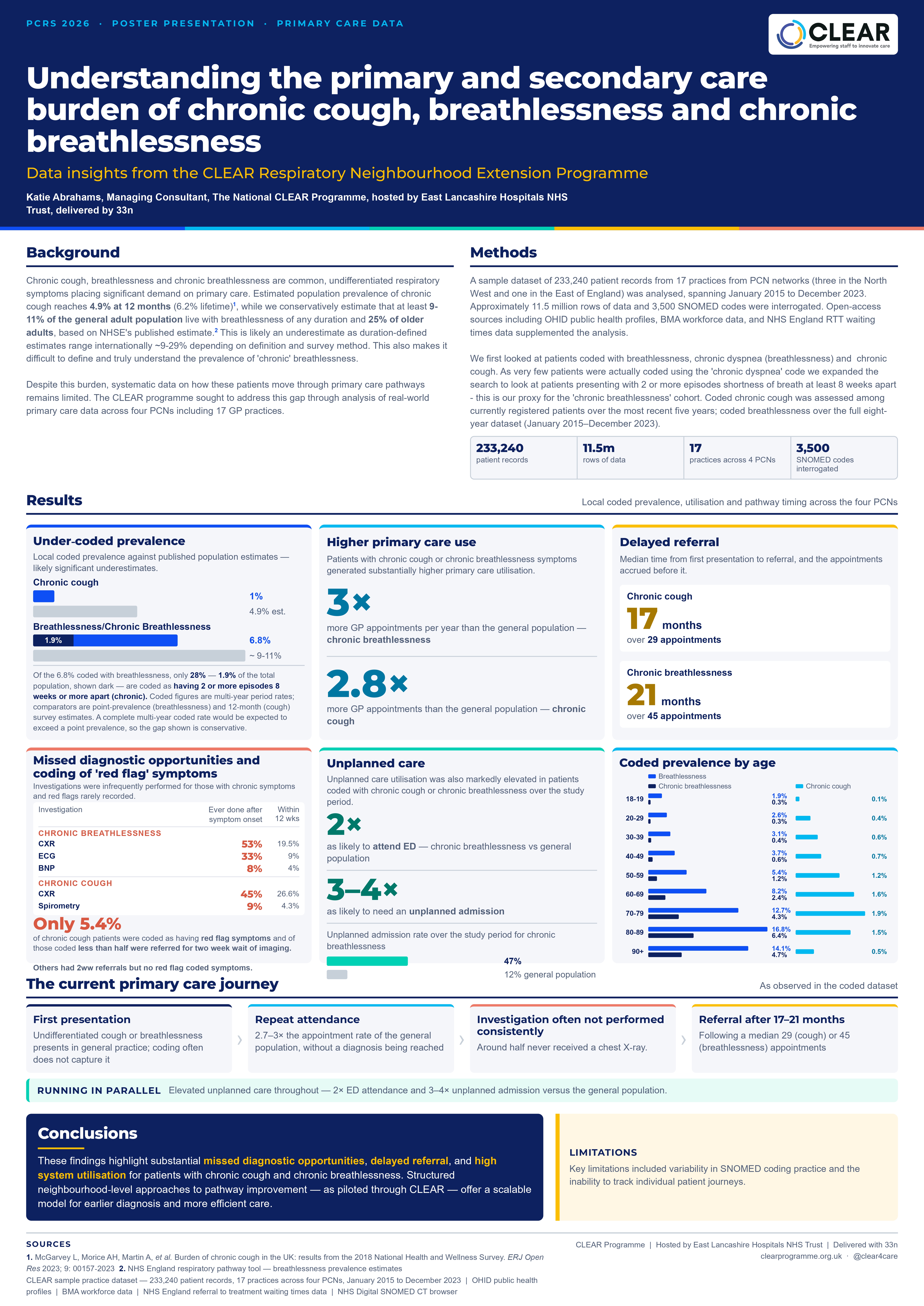
Chronic cough and chronic breathlessness are common, undifferentiated respiratory symptoms placing significant demand on primary and secondary care. Self-reported population prevalence of chronic cough reaches approximately 4.9% at 12 months, while breathlessness affects up to 10% of the general population and 33% of older adults. Despite these challenges, systematic data on how patients move through primary and secondary care pathways remains limited and we know there is significant under-coding. Asthma and Lung UK's recent report on neighbourhood respiratory diagnostics policy advocates symptom-led assessment through neighbourhood diagnostic hubs, with chronic cough and breathlessness identified as key triggers for earlier objective testing. The CLEAR programme sought to address this gap through analysis of real-world primary care data.
Methods
A sample dataset of 233,240 patient records from 17 practices from four PCN networks were analysed, spanning January 2015 to December 2023. Approximately 11.5 million rows of data and 3,500 SNOMED codes were interrogated. Open-access sources including OHID public health profiles, BMA workforce data, and NHS England RTT waiting times data supplemented the analysis. Key limitations included variability in SNOMED coding practice and the inability to track individual patient journeys.
Results
Local coded prevalence was 1% for chronic cough and 1.8%/6.7% for chronic breathlessness/shortness of breath — likely significant underestimates. Patients with these symptoms generated substantially higher primary care utilisation: those with chronic breathlessness attended 3x more appointments per year than the general population; chronic cough patients 2.7x more GP appointments. Despite this, data showed investigations were infrequently performed, and only 5.4% of patients with red flag symptoms were coded as such. Median time from first presentation to secondary-care referral was 17 months for chronic cough and 21 months for chronic breathlessness. Unplanned care utilisation was also elevated, with chronic breathlessness patients twice as likely to attend ED as the general population.
Conclusions
These findings highlight substantial missed diagnostic opportunities, delayed referral, and high system utilisation for patients with chronic cough and breathlessness. Structured neighbourhood-level approaches to pathway improvement — as designed and piloted through phase 2 of the CLEAR project — offer a scalable model for earlier diagnosis and more efficient care.
Funding: By the NHSE Elective Respiratory Programme
Conflicts of interest: None