Community Respiratory Hub: A system redesign Model (ID 757)
CLCH NHS Trust
Abstract
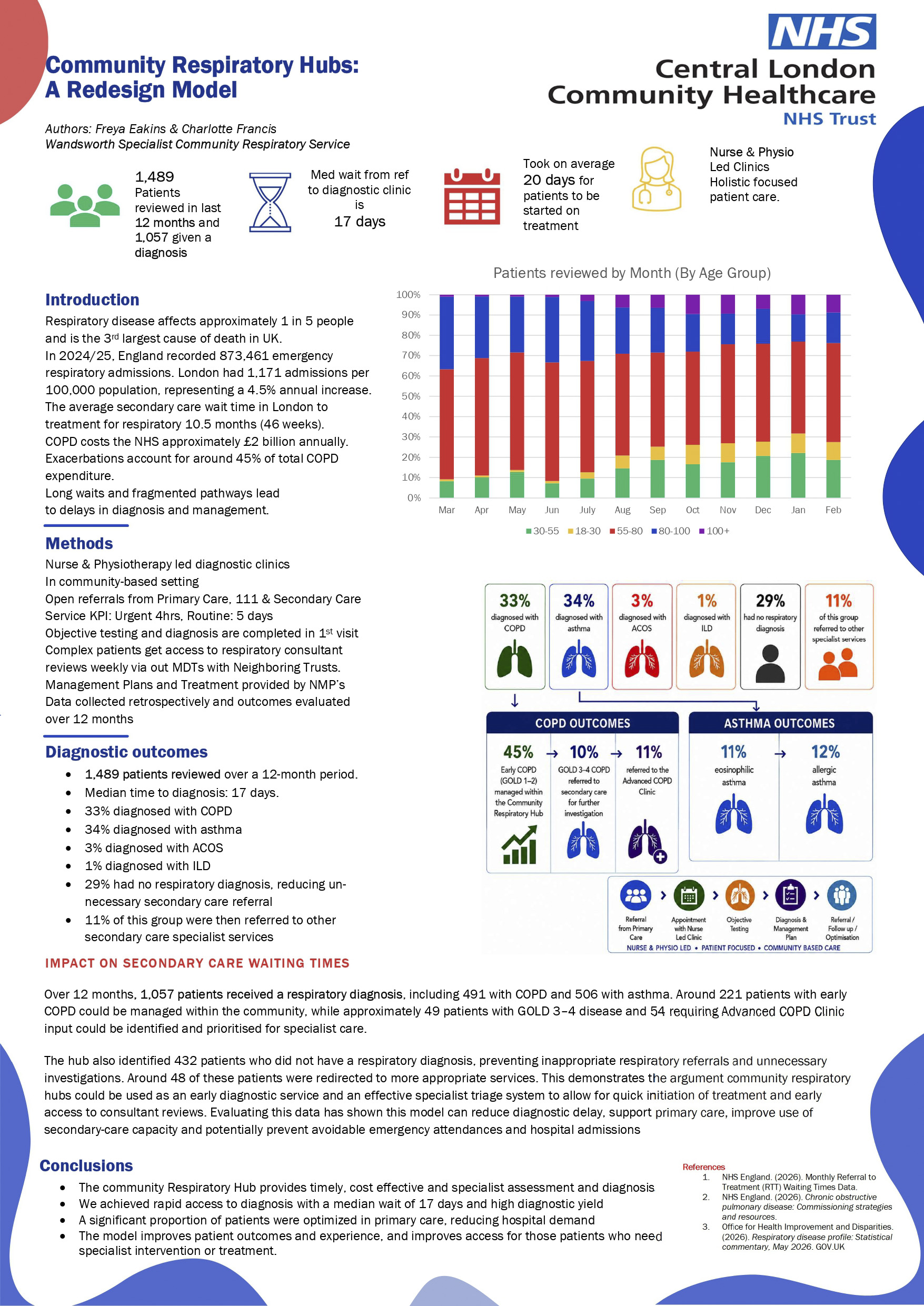
Our Community Respiratory Hub recognises and responds to the increasing respiratory outpatient waiting lists, delayed diagnosis and rising hospital demand for patients with suspected or established respiratory disease. Traditional pathways often result in prolonged waits for specialist assessment, delayed treatment optimisation and unnecessary secondary care referrals. Our service is a CNS and allied healthcare professional led assessment pathway to deliver earlier diagnosis, rapid intervention and integrated community-based management aligned with NHS long-term priorities for prevention and neighbourhood care.
The key problem identified was that many patients referred to secondary care either did not require specialist respiratory follow-up or could have been safely managed within the community with appropriate support. Conversely, patients with severe disease were often delayed in accessing specialist input. Fragmented pathways also reduced opportunities for proactive disease management and hospital avoidance.
To address this, patients referred to the hub are assessed within three weeks, with access to rapid diagnostics and weekly consultant-supported multidisciplinary team meetings. The MDT model enables collaborative decision-making, shared-care planning and earlier specialist oversight without reliance on traditional outpatient pathways. Patients suitable for community management are optimised locally, while those requiring specialist intervention are escalated rapidly. The service also incorporates a Hospital Optimisation Service and Avoidance Response (HOS-AR) pathway, including a four-hour urgent response service to prevent deterioration and admission.
Evaluation data demonstrates significant clinical and system benefits. Of 729 newly diagnosed patients, 45% were diagnosed with early-stage COPD (GOLD 1–2) and fully managed within the community, supporting earlier intervention and reducing progression risk. A further 21% with advanced COPD (GOLD 3–4) were fast-tracked for specialist management through integrated MDT pathways. Importantly, 39% of patients had no underlying respiratory pathology identified, preventing unnecessary secondary care follow-up; 11% were redirected appropriately to alternative services. Additionally, 32% of patients with established COPD were optimised through the HOS-AR pathway, supporting hospital avoidance.
This model demonstrates that community respiratory hubs can reduce inappropriate referrals, improve access for patients with complex disease and support a shift from reactive hospital-centred care to proactive, integrated population respiratory health management. We hope with more hubs like this, earlier diagnosis can be increased.
Funding: None
Conflicts of interest: None