VALIDATE: severe asthma digital implementation and optimisation across Humber and North Yorkshire (ID 773)
HUTH
Abstract
Background
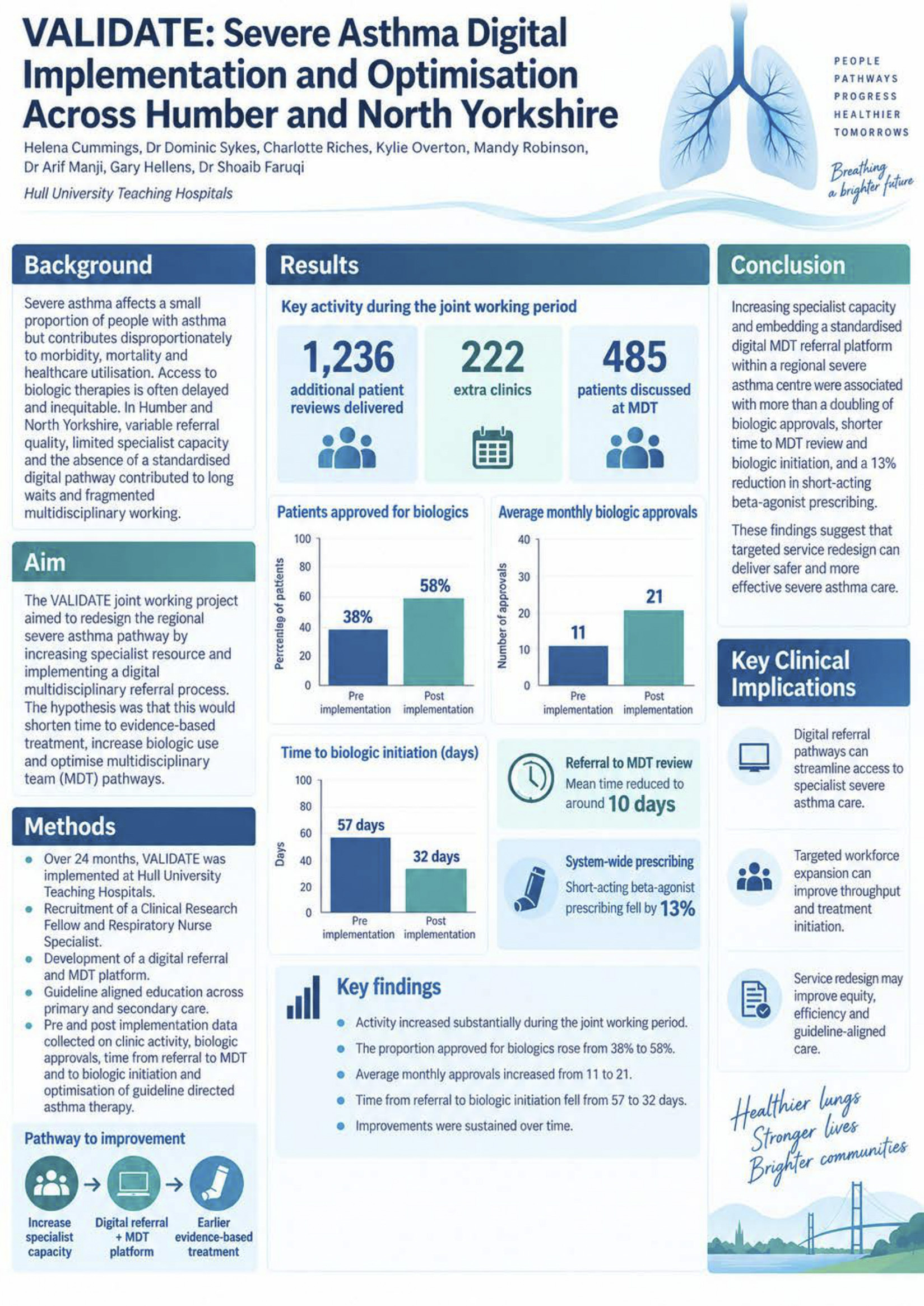
Severe asthma affects a small proportion of people with asthma but accounts for a high burden of morbidity, mortality and healthcare utilisation. Access to biological therapies is often delayed and inequitable. In Humber and North Yorkshire, variable referral quality, limited specialist capacity and the absence of a standardised digital pathway contributed to long waits and fragmented multidisciplinary working.
Aim
The VALIDATE joint working project aimed to redesign the regional severe asthma pathway by increasing specialist resource and implementing a digital multidisciplinary referral process, with the hypothesis that this would shorten time to evidence-based treatment, increase biologic use and optimise multidisciplinary team (MDT) pathways.
Methods
Over 24 months, VALIDATE was implemented at Hull University Teaching Hospitals, including recruitment of a Clinical Research Fellow and Respiratory Nurse Specialist, development of a digital referral and MDT platform and guideline aligned education across primary and secondary care. Pre and post implementation data were collected on clinic activity, biologic approvals, time from referral to MDT and to biologic initiation and optimisation of guideline directed asthma therapy.
Results
During the joint working period, 1,236 additional patient reviews were delivered in 222 extra clinics. Overall, 485 patients were discussed at MDT with the proportion approved for biologics increasing from 38% to 58% and average monthly approvals growing from 11 to 21. Mean time from referral to MDT review fell to around 10 days and time to biologic initiation reduced from 57 to 32 days, with these gains sustained. Short acting beta agonist prescribing across the system fell by 13%.
Conclusion
Increasing specialist capacity and embedding a standardised digital MDT referral platform within a regional severe asthma centre were associated with more than a doubling of biologic approvals, shorter time to MDT review and biologic initiation, along with a 13% reduction in short acting beta agonist prescribing. This indicates that targeted service redesign can deliver safer and more effective severe asthma care.
Funding: As above
Conflicts of interest: This abstract reports on a clinical pathway developed as part of a quality improvement project at Hull University Teaching Hospitals NHS Trust. The project was conducted under a joint working agreement with AstraZeneca. AstraZeneca provided financial support for staffing; however, they had no role in the service implementation.