Improving Access to Respiratory Care for Marginalised Populations: A One-Stop Community Clinic Model (ID 778)
East Sussex Healthcare NHS Trust
Abstract
Introduction
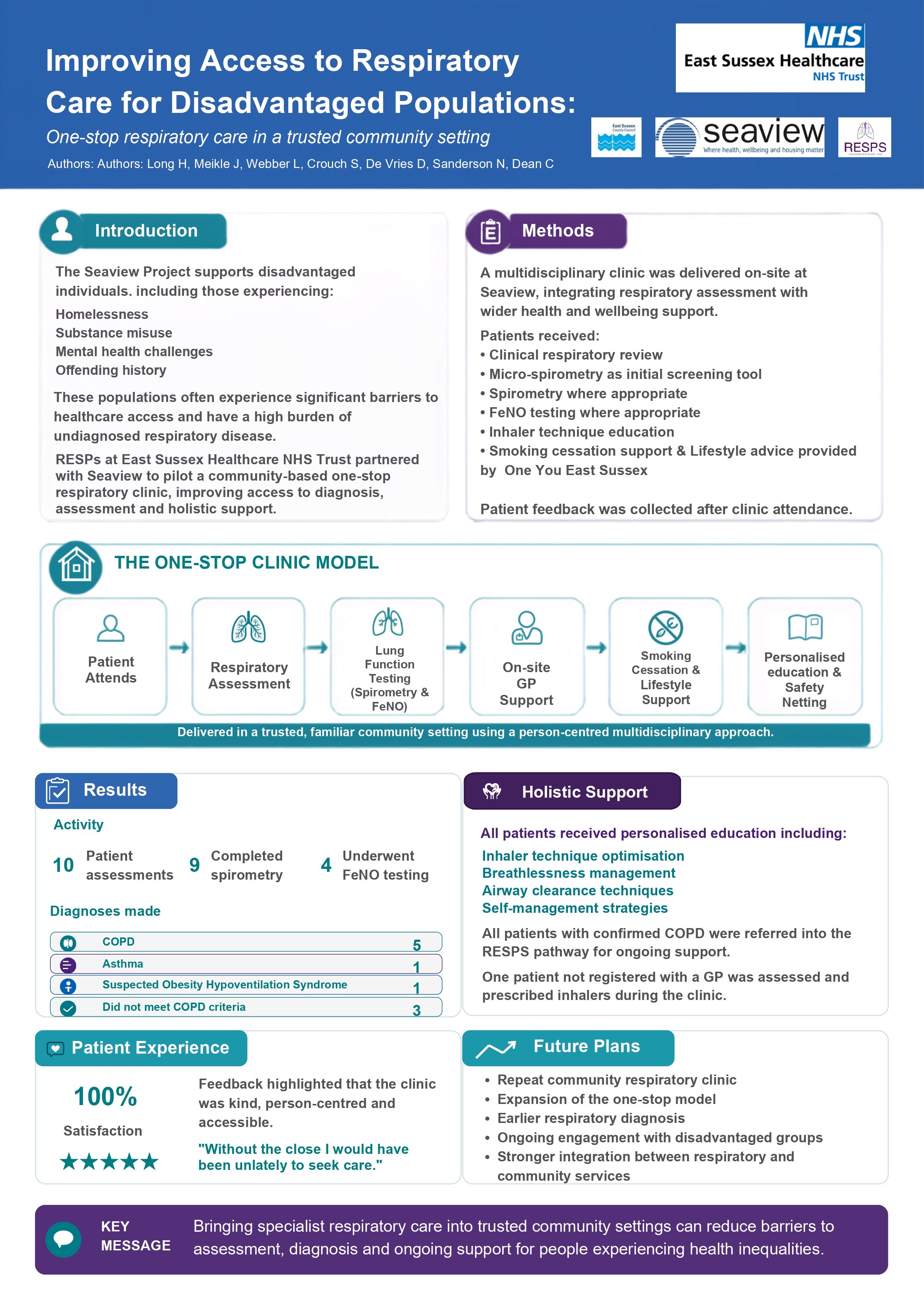
The Seaview Project supports marginalised individuals, including those experiencing substance misuse, mental health challenges, offending history, and homelessness. These groups often face significant barriers to accessing healthcare and have a high burden of undiagnosed respiratory disease. The Respiratory Specialist Service (RESPS) at East Sussex Healthcare NHS Trust (ESHT) collaborated with Seaview to deliver a pilot “one-stop” respiratory clinic, aiming to improve access to assessment, diagnosis, and holistic support within a familiar community setting.
Methods
A multidisciplinary clinic was delivered on-site at Seaview, integrating respiratory assessment with wider health and lifestyle support. Patients underwent clinical review and, where appropriate, lung function testing including spirometry and fractional exhaled nitric oxide (FeNO). Micro-spirometry was used as an initial screening tool. The clinic also included input from respiratory clinicians, an on-site GP, and One You East Sussex, offering smoking cessation and lifestyle advice. Patient experience feedback was collected following the clinic.
Results
Ten patients were assessed. Nine completed spirometry (one was not required following micro-spirometry screening), and four underwent FeNO testing. Diagnoses included five cases of chronic obstructive pulmonary disease (COPD), one asthma case, and one suspected obesity hypoventilation syndrome. Three patients did not meet spirometric criteria for COPD but were provided with tailored advice and safety-netting.
All patients received personalised education, including inhaler technique optimisation, breathlessness management, and airway clearance strategies. All patients with confirmed COPD were referred into the RESPS pathway, enabling access to a duty phone line for exacerbation support. One patient who was not registered with a GP was assessed and prescribed inhalers by the on-site GP.
Patient feedback was universally positive, with all respondents rating satisfaction as 5/5 and highlighting the service as kind, person-centred, and accessible. Several indicated they would have been unlikely to seek care without this clinic.
Future Plans
This pilot demonstrates the feasibility and value of delivering integrated respiratory care in community settings for underserved populations. Future plans include repeat follow-up clinics at Seaview and expansion of the “one-stop” model to further improve early diagnosis, engagement, and ongoing respiratory care in marginalised groups.
Funding: The clinic was funded by NHS Confederation (now NHS Alliance) as part of the broader COPD programme of work in the Hastings area.
Conflicts of interest: None