Using a modified Esther model to develop a blueprint for Neighbourhood Health in chronic obstructive pulmonary disease (COPD) (ID 797)
Primary Care Respiratory Society (PCRS)
Abstract
Introduction
Neighbourhood Health is a key element of NHS reform following the Darzi Report [1] and the NHS 10-year Health Plan [2], calling for better integration across all healthcare sectors. COPD, which affects approximately 1.7 million diagnosed patients in the UK [3], is an ideal test case to illustrate effective neighbourhood health models and how these can improve patient outcomes. In October 2025, the Primary Care Respiratory Society (PCRS) used a modified Esther model to explore core components of an effective neighbourhood response, based on what is best for the patient, and develop a blueprint for COPD neighbourhood health.
Methods
A multidisciplinary group of 23 experts and additional patient representation was convened for a one-day meeting in October 2025.
To ensure a patient-centred approach, Esther café sessions were run throughout the day with specific discussion topics focused on ‘What is best for Christine?’ Experts were allocated into groups, ensuring good role representation at each table and encouraging professionals across healthcare sectors to collaborate. The patient representative circulated between groups at each session so that experts could explore lived patient experience, system barriers and gaps and opportunities for improvement. At the end of each session, group representatives gave a short summary of their conclusions.
Results
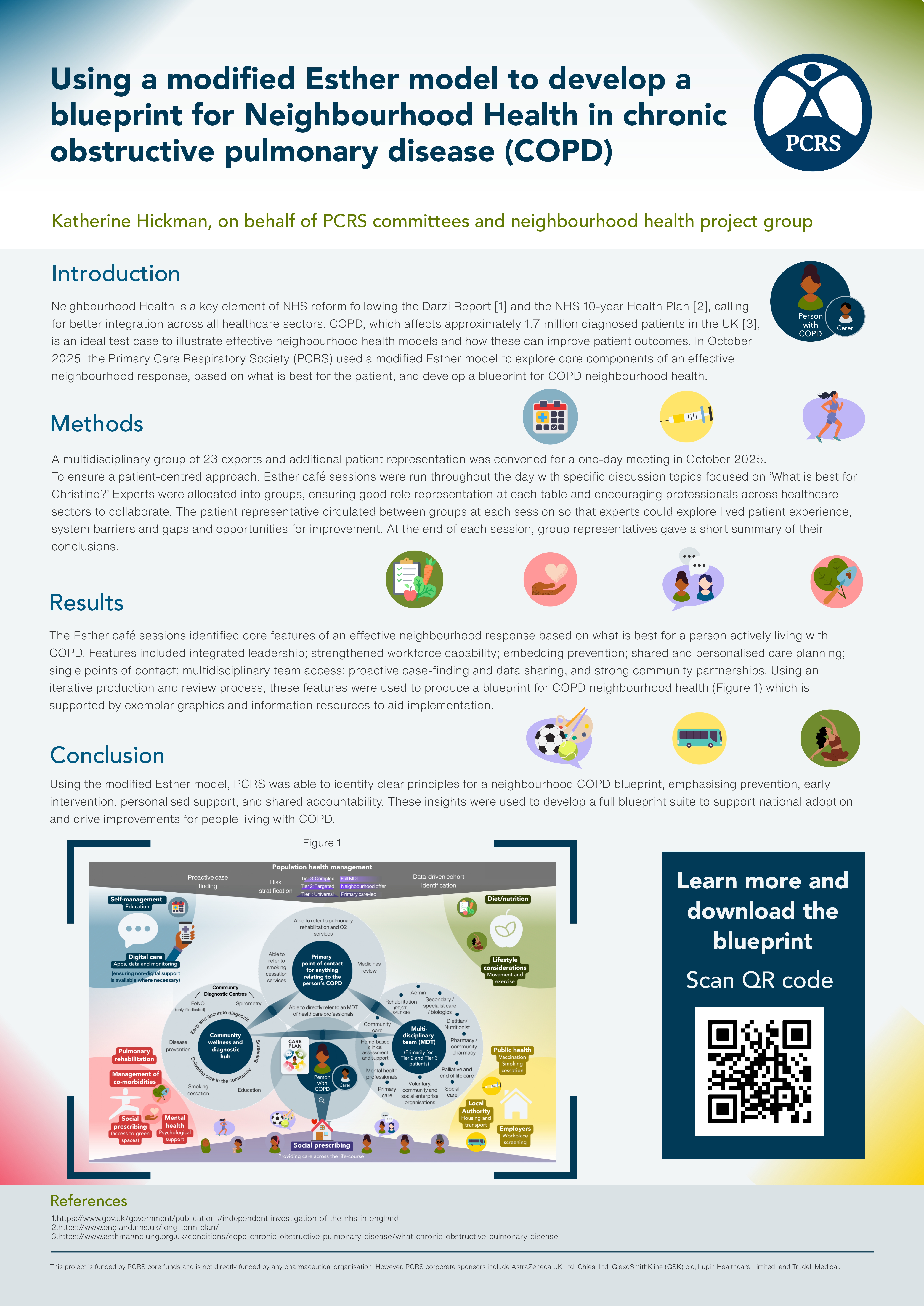
The Esther café sessions identified core features of an effective neighbourhood response based on what is best for a person actively living with COPD. Features included integrated leadership; strengthened workforce capability; embedding prevention; shared and personalised care planning; single points of contact; multidisciplinary team access; proactive case-finding and data sharing, and strong community partnerships. Using an iterative production and review process, these features were used to produce a blueprint for COPD neighbourhood health (Figure 1) which is supported by exemplar graphics and information resources to aid implementation.
Conclusion
Using the modified Esther model, PCRS was able to identify clear principles for a neighbourhood COPD blueprint, emphasising prevention, early intervention, personalised support, and shared accountability. These insights were used to develop a full blueprint suite to support national adoption and drive improvements for people living with COPD (Link: https://www.pcrs-uk.org/resource/current/blueprint-chronic-obstructive-pulmonary-disease-copd-neighbourhood-health UNDER EMBARGO).
References
1.https://www.gov.uk/government/publications/independent-investigation-of-the-nhs-in-england
2.https://www.england.nhs.uk/long-term-plan/
3.https://www.asthmaandlung.org.uk/conditions/copd-chronic-obstructive-pulmonary-disease/what-chronic-obstructive-pulmonary-disease
Funding: This project is funded by PCRS core funds and is not directly funded by any pharmaceutical organisation. However, PCRS corporate sponsors include AstraZeneca UK Ltd, Chiesi Ltd, GlaxoSmithKline (GSK) plc, Lupin Healthcare Limited, and Trudell Medical.
Conflicts of interest: None