Improving inpatient screening for Undiagnosed Obstructive Sleep Apnoea in High-Risk Respiratory Admissions. (ID 805)
University hospitals Derby and Burton NHS trust
Abstract
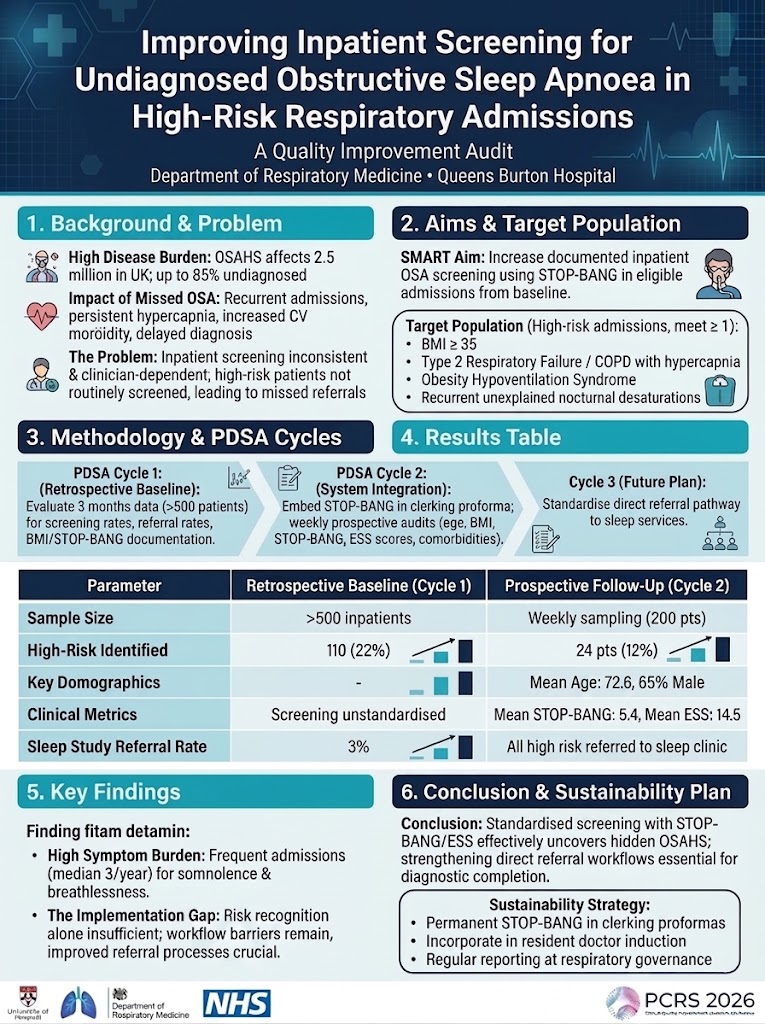
Background: Obstructive sleep apnoea/Hypopnoea Syndrome (OSAHS) is common yet frequently under‑diagnosed, particularly among hospitalised patients with multiple respiratory and cardiometabolic comorbidities. Sleep services across the UK face high demand, accounting for half of all referrals into some hospital respiratory departments. Despite the high burden of disease—an estimated 2.5 million individuals live with OSAHS, with up to 85% remaining undiagnosed—traditional hospital referral pathways often struggle to keep pace with the volume.
Early identification of high‑risk patients during an inpatient admission may improve access to diagnostic pathways and unnecessary admissions. This study evaluated screening practices for OSA in a respiratory ward population.
Methods: A retrospective review of respiratory ward admissions identified patients at high risk of OSA was performed to identify the scope of need. Screening outcomes, referral rates, and completion of sleep studies were recorded. A subsequent prospective review of patients acutely admitted to the respiratory ward who were high risk based on comorbidities were screened using the Epworth Sleepiness Scale, STOP-BANG questionnaire and demographic and clinical risk factors to identify high‑risk individuals.
Results: Retrospective screening of Over 500 inpatients over a 3-month period identified 110 high‑risk patients; however, only 3% were referred for formal sleep studies, highlighting a significant gap between risk identification and diagnostic action.
Prospective review of patients admitted since April 2026 has identified mean age of high-risk patients was 72.6 with 65% being male. Mean STOP-BANG was 5.4 and Epworth score of 14.5 and median admission rate of 3 admissions a year to secondary care for symptoms of breathlessness and daytime somnolence.
Conclusion:
High‑risk OSA patients are frequently missed during routine inpatient care. The prospective phase identified a greater proportion of patients with elevated Epworth scores and multiple OSA risk factors. Despite improved recognition, referral rates remained limited, suggesting persistent pathway and workflow barriers. It seems standardised screening using validated tools improves identification but does not automatically translate into increased diagnostic referrals. Strengthening inpatient screening pathways and referral processes is essential to reduce the burden of undiagnosed OSA and support timely intervention.
Funding: none
Conflicts of interest: none