Impact of a structured cardiopulmonary risk–focused COPD review in primary care (ID 808)
Mid-Ulster GP Federation
Abstract
Background
Cardiovascular disease is highly prevalent and frequently under-recognised in patients with chronic obstructive pulmonary disease (COPD) managed in primary care. Previous work in this population demonstrated a substantial burden of cardiopulmonary comorbidity, supporting the need for systematic cardiovascular risk assessment during COPD reviews.
Aim
To evaluate the impact of implementing a structured COPD review template incorporating cardiopulmonary risk assessment on clinical management in primary care.
Methods
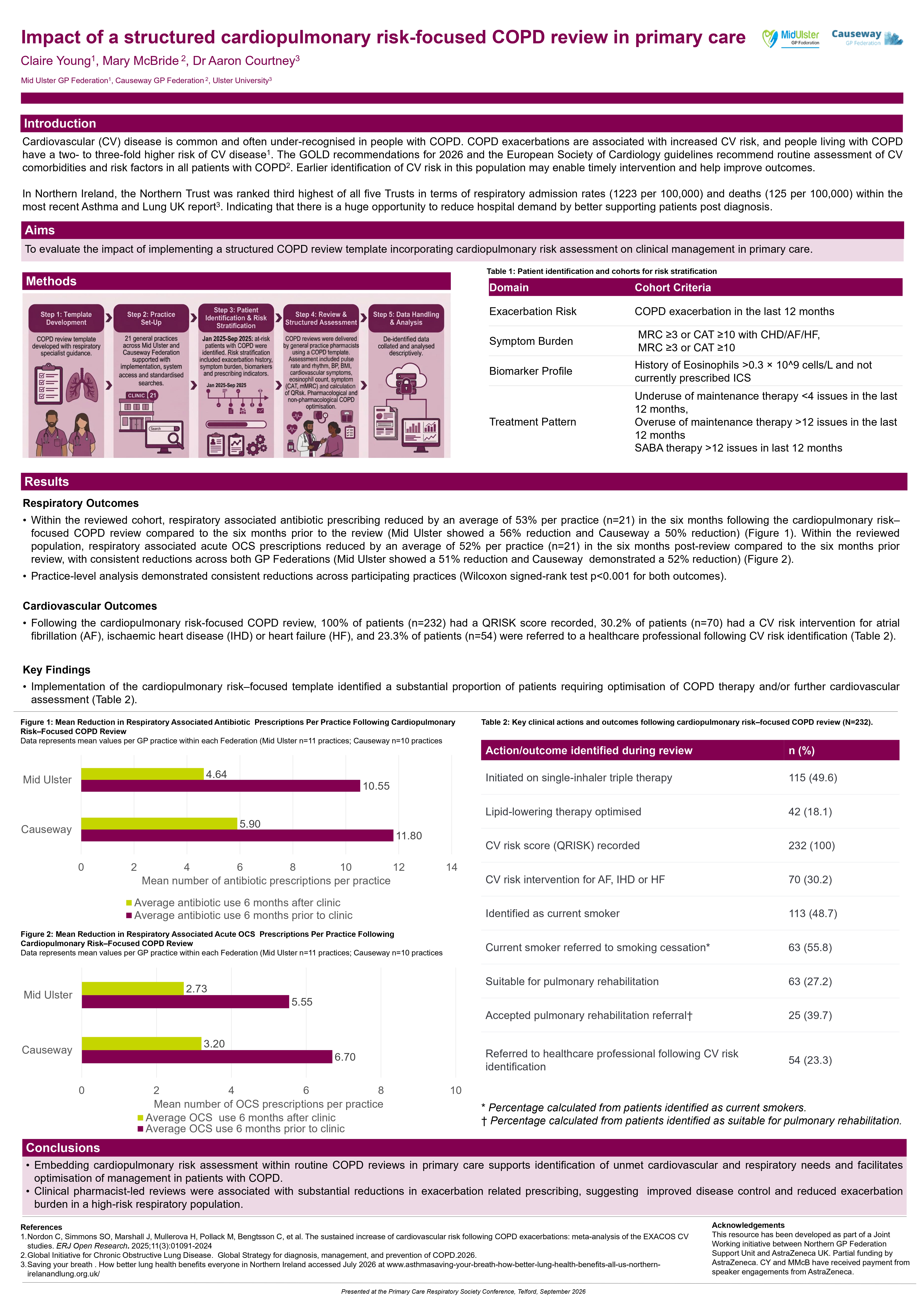
Patients with COPD registered across 22 general practices within the Mid-Ulster and Causeway Federations were risk-stratified and invited for review between January and September 2025. Risk stratification extended beyond exacerbation history to include symptom burden, biomarkers, and prescribing indicators. Reviews were delivered by general practice pharmacists using a structured template incorporating optimisation of pharmacological and non-pharmacological COPD management, assessment of pulse rate and rhythm, blood pressure, body mass index, cardiovascular symptoms, eosinophil count, symptom scores (CAT, mMRC), and calculation of QRISK. De-identified data were collated and analysed descriptively.
Results
Implementation of the cardiopulmonary risk–focused template identified a substantial proportion of patients requiring optimisation of COPD therapy and/or further cardiovascular assessment. Interventions included medication optimisation, referral for cardiovascular investigation where indicated, and targeted non-pharmacological interventions aimed at reducing future cardiopulmonary risk (Table 1).
A total of 232 patients underwent cardiopulmonary risk-focused COPD review. Antibiotic prescribing reduced from 234 courses in the six months preceding review to 110 courses in the six months following review, representing a 53.0% reduction. Oral corticosteroid prescribing reduced from 128 to 62 courses (51.6% reduction). Combined exacerbation-related prescribing reduced from 362 to 172 courses (52.5% reduction). Practice-level analysis demonstrated consistent reductions across participating practices (Wilcoxon signed-rank test p<0.001 for both outcomes).
Conclusion
Embedding cardiopulmonary risk assessment within routine COPD reviews in primary care supports identification of unmet cardiovascular and respiratory needs and facilitates optimisation of management in patients with COPD. These clinical pharmacist-led reviews were associated with substantial reductions in exacerbation-related prescribing, suggesting improved disease control and reduced exacerbation burden in a high-risk respiratory population.
Findings from this high-burden primary care setting are likely applicable to similar health systems managing COPD populations with significant cardiopulmonary comorbidity.
Funding: This project was a joint working project between Astra Zeneca and the Northern Federation Support Unit.
Conflicts of interest: Claire Young- AstraZeneca, Chiesi
Mary McBride- AstraZeneca
Aaron Courteney- none