Integrated COPD Optimisation in Primary Care: Improving Outcomes Through Inhaler Technique and Multimorbidity Management (ID 829)
Priory Medical Group, Haxby Group Practice, Selby Town PCN and York Medical Group in York, North Yorkshire
Abstract
Background
COPD outcomes are influenced by both respiratory disease and multimorbidity. Despite guideline‑based treatment, many patients remain symptomatic. Inhaler technique, adherence, and cardiopulmonary risk are frequently under‑recognised, while comorbidities such as cardiovascular disease, mental health conditions, and osteoporosis contribute significantly to poor outcomes. Structured, integrated reviews provide an opportunity to systematically address modifiable drivers of disease.
Aim
To evaluate the impact of a structured COPD optimisation model on symptom burden, inhaler technique and adherence, identification of comorbidity, and patient engagement with evidence‑based interventions.
Methods
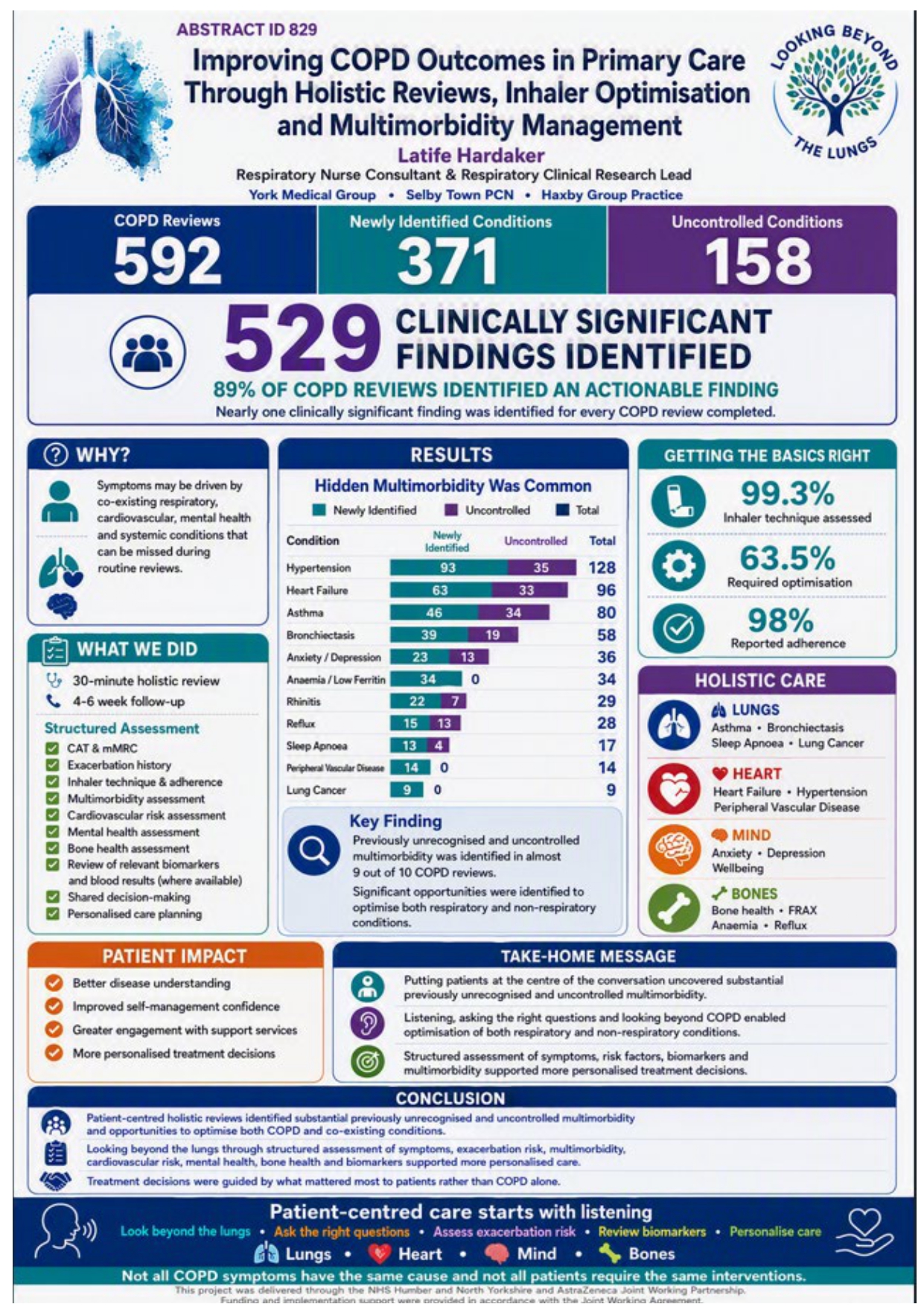
A total of 594 patients were reviewed across primary care networks using a structured model comprising a 30‑minute face‑to‑face consultation and 4–6 week follow‑up (telephone).
Assessment included symptom burden (CAT / mMRC), inhaler technique (teach‑back) and adherence, treatment optimisation aligned to phenotype, cardiovascular risk (AF, heart failure, BP, QRISK3), multimorbidity screening (bone health, mental health, additional respiratory disease), and exacerbation history.
Interventions included referral to pulmonary rehabilitation, smoking cessation, social prescribing, and personalised care planning.
Results
Inhaler technique was assessed in 99.3% of patients, with 63.5% requiring optimisation for COPD. Adherence at follow‑up was 98%.
Previously unrecognised comorbidities, including cardiovascular disease, were identified, and additional respiratory conditions (e.g. bronchiectasis and OSA) were recognised in a subset.
Improvements were observed in symptom burden (CAT / mMRC), patient understanding and self‑management confidence, and engagement with pulmonary rehabilitation, smoking cessation, and social prescribing.
Conclusion
Structured COPD optimisation enables identification of previously unrecognised comorbidity, correction of inhaler technique, and improved patient engagement. This integrated model is deliverable within routine primary care and supports phenotype‑driven, patient‑centred care with improved clinical and service outcomes.
Keywords
COPD, Primary Care, Multimorbidity, Inhaler Technique, Integrated Care
Funding: The LOGIC programme was delivered through collaborative working between NHS services and AstraZeneca; all clinical decisions were NHS‑led.
Conflicts of interest: The LOGIC programme was delivered through collaborative working between NHS services and AstraZeneca; all clinical decisions were NHS‑led.